










Breaking News
 'UNFAIR': Mamdani's city-run grocer plan SLAPPED with lawsuit
 Trump Says If Iran Had a Nuclear Weapon, He Would Have Politely Called the Supreme Leader...
 Tucker Carlson: We are on the brink of a world war that ends with the use of nuclear weapons
 Who is trying to destroy the United States and the world?
Top Tech News
 Freezable titanium plate keeps your cooler chilled way longer than ice packs
 Review: Affordable thermal device is made for discovering life outdoors
 AI Whistleblower Tells Tucker How AI Could Kill All Humans by 2040
 You Hate Flock? Well There's More...
 Will Spiking Diesel Prices Drive Autonomous Trucking?
 Chinese Concept Video Imagines the Future of Warfare
 OPTIMUS CONFIRMED: 15,000 Bots This Year -- Tesla to $3,000
 What is Going On With Robotaxi and Cybercab? Here Are All the Answers
 Floating data center would provide water and electricity to 32,000 homes
 OpenAI Cuts Off Elon's Cursor, Humanity's First Star Probe, and Trump's Nuclear Mars Shi



Venus Aerospace Hypersonic Engine Breakthroughs
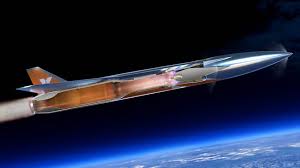
They have a ramjet integrated with a rotating detonation rocket engine (RDRE) which they call the Venus Detonation Ramjet (VDR2). This will enable hypersonic flight (up to Mach 6-10) from conventional runways, with emphasis on efficiency, challenges, and innovations. It could also be used to massively boost the payload to space.
They use hydrogen peroxide (H2O2) mixed with fuel in the RDRE to achieve the detonation process.
Duggleby introduces Venus Aerospace's unique approach to hypersonic propulsion, combining a traditional ramjet (for efficient high-speed cruising) with an RDRE (for high-thrust takeoff and acceleration). He contrasts this with conventional turbofan engines, noting that rockets and detonation-based systems are more efficient at supersonic and hypersonic speeds. The RDRE is described as a game-changer" ecause it uses a continuous detonation wave rather than steady combustion, leading to 15-30% better fuel efficiency and higher thrust in a compact design.
Efficiency and Specific Impulse (ISP) Curve
The discussion dives into engine efficiency, where Duggleby explains how the RDRE rides up the ISP curve compared to traditional rockets.
Hydrogen peroxide (as a liquid oxidizer, stabilized at 70-100% concentration for safety and performance) is mixed with fuel (such as jet fuel or hydrocarbon-based propellants) and injected into a ring-shaped annular chamber. This mixture is ignited to create a supersonic detonation wave that rotates continuously around the chamber at thousands of revolutions per second. The detonation wave sustains itself by compressing and igniting fresh mixture, generating immense pressure and thrust with less propellant consumption.
This process is more energetic than deflagration (subsonic combustion) in standard engines, allowing for greater range and payload capacity.
Bench tests were initially done where the RDRE ran for extended durations (e.g., 4 minutes).
There were many technical Challenges including Heat Management and Modeling.