










Breaking News
 California Declares State Of Emergency Ahead Of Strong El Niño
 'Pausing' Intensifies: OpenAI Unleashes Latest Model Minutes After Dario Dumps Magnum Opus
 Trump Calls For Diesel Export Ban After 3-Hour 'Very Productive' Iran Talks
 Wendy's faces 300 closures across 15 states due to crippling beef prices
Top Tech News
 BEYOND THE MOON: NASA plans a nuclear-powered fleet to push DEEPER into space
 Big Oil Backs Mazama's $135 Million Bet On Superhot Geothermal
 Quantum compass takes flight on Northrop's Lumberjack drone
 Terrifying AI Behavior Even Its Creators Couldn't Explain
 WW3 Near-Miss? AI Hallucinated Nuclear Weapons Components Aboard Chinese Vessel Bound For Iran
 Stripe Is Building the Toll Road for the Machine Economy
 Toyota Dakar hopeful swaps twin-turbo V6 for hydrogen fuel cells
 4-min turbo-inflatable cubic camp castle is now available in the USA
 Researchers Used Claude To Hack OpenAI Employee Accounts
 Chinese Scientists Develop New Oil Refining Method That Cuts Energy Use by 90%



'High Steaks' As Israeli Startup Prints World's First Ribeye
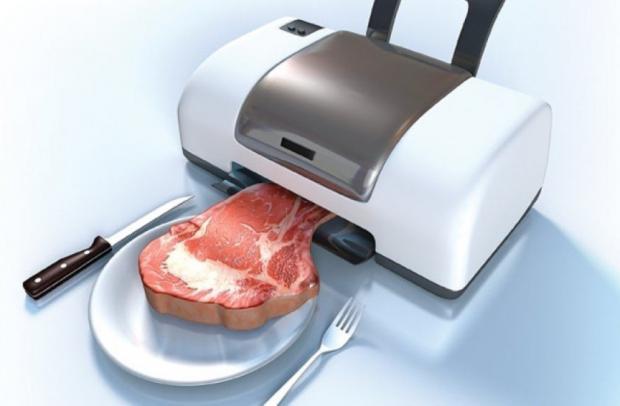
Aleph teamed up with biomedical researchers at the Technion-Israel Institute of Technology to print lab-grown ribeyes intended for human consumption without slaughtering an animal.
"It incorporates muscle and fat similar to its slaughtered counterpart," the company said in a press release, adding that its steaks taste just like a "juicy ribeye steak you'd buy from the butcher."
Aleph's technology is unique. It prints "actual living cells that are then incubated to grow, differentiate, and interact, in order to acquire the texture and qualities of a real steak," the release said.
"A proprietary system, similar to the vascularization that occurs naturally in tissues, enables the perfusion of nutrients across the thicker tissue and grants the steak with the similar shape and structure of its native form as found in livestock before and during cooking," the release continued.