










Breaking News
 How War Propaganda Justifies Conscription Into Unjust Wars
 Trump's "Russian sanctions" Have Destroyed the German Automobile Industry
 Where are the headlines? 2026 is the 'First Time in 112 Years: No Atlantic Hurricanes By Sept. 2
 CNN Staffers Panic over Paramount Merger: 'Bloodbath Coming,' Newsroom Is 'Like a Funera
Top Tech News
 BEYOND THE MOON: NASA plans a nuclear-powered fleet to push DEEPER into space
 Big Oil Backs Mazama's $135 Million Bet On Superhot Geothermal
 Quantum compass takes flight on Northrop's Lumberjack drone
 Terrifying AI Behavior Even Its Creators Couldn't Explain
 WW3 Near-Miss? AI Hallucinated Nuclear Weapons Components Aboard Chinese Vessel Bound For Iran
 Stripe Is Building the Toll Road for the Machine Economy
 Toyota Dakar hopeful swaps twin-turbo V6 for hydrogen fuel cells
 4-min turbo-inflatable cubic camp castle is now available in the USA
 Researchers Used Claude To Hack OpenAI Employee Accounts
 Chinese Scientists Develop New Oil Refining Method That Cuts Energy Use by 90%



Carbon fiber exoskeleton is the latest to boost worker safety
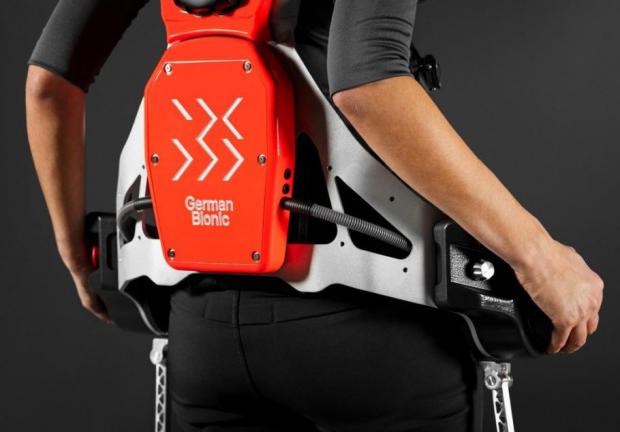
Typically worn over the clothing on the torso (or even the whole body), industrial assistive exoskeletons incorporate electric motors – or sometimes just springs – that augment the wearer's muscle power as they lift items, reach up, squat, or perform other physically demanding tasks.
The 4th-gen Cray X is no different, utilizing two servo motors to offset lifted loads of up to 28 kg (62 lb). In doing so, it's claimed to protect the user's lower back from excessive strain. Power is supplied by a removable lithium battery pack, which should reportedly be good for eight hours of runtime per charge.
The new exoskeleton is also compatible with the Internet of Things, allowing it to be wirelessly linked to the infrastructure of "smart factories," and to automatically receive over-the-air firmware updates. It can additionally be used with the company's augmented reality Cray Visor, which overlays a head-up display on the wearer's view of the task at hand.
German Bionic is now offering the 4th-gen Cray X on a subscription model to corporate clients, with rates starting at €699 (about US$794) per month.