










Breaking News
 15 Years After Occupy, the Case Against the System Has Never Been Clearer
 8 Prepper Hacks for Cleaning Without Running Water
 The Economy Is Stagnating
 Britain To Appoint A Dedicated Tax Agent To Every Single Billionaire
Top Tech News
 BEYOND THE MOON: NASA plans a nuclear-powered fleet to push DEEPER into space
 Big Oil Backs Mazama's $135 Million Bet On Superhot Geothermal
 Quantum compass takes flight on Northrop's Lumberjack drone
 Terrifying AI Behavior Even Its Creators Couldn't Explain
 WW3 Near-Miss? AI Hallucinated Nuclear Weapons Components Aboard Chinese Vessel Bound For Iran
 Stripe Is Building the Toll Road for the Machine Economy
 Toyota Dakar hopeful swaps twin-turbo V6 for hydrogen fuel cells
 4-min turbo-inflatable cubic camp castle is now available in the USA
 Researchers Used Claude To Hack OpenAI Employee Accounts
 Chinese Scientists Develop New Oil Refining Method That Cuts Energy Use by 90%



Emotion-sensing robot launches to assist space station astronauts
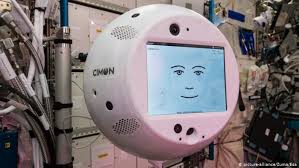
The Crew Interactive Mobile Companion 2, or CIMON 2, is a spherical droid with microphones, cameras and a slew of software to enable emotion recognition.
The droid was among 5,700 pounds (2,585 kg) of supplies and experiments aboard SpaceX's Falcon 9 rocket, whose midday launch had been delayed from Wednesday due to high winds.
"The overall goal is to really create a true companion. The relationship between an astronaut and CIMON is really important," Matthias Biniok, the lead architect for CIMON 2, told Reuters. "It's trying to understand if the astronaut is sad, is he angry, joyful and so on."
Based on algorithms built by information technology giant IBM Corp (IBM.N) and data from CIMON 1, a nearly identical prototype that launched in 2018, CIMON 2 will be more sociable with crew members. It will test technologies that could prove crucial for future crewed missions in deep space, where long-term isolation and communication lags to Earth pose risks to astronauts' mental health.