










Breaking News
 'UNFAIR': Mamdani's city-run grocer plan SLAPPED with lawsuit
 Trump Says If Iran Had a Nuclear Weapon, He Would Have Politely Called the Supreme Leader...
 Tucker Carlson: We are on the brink of a world war that ends with the use of nuclear weapons
 Who is trying to destroy the United States and the world?
Top Tech News
 NASA Super Light Solar Sail Project Will Be 12-40 Times Lighter and Faster
 Space Telescope Interferometer to Image Exoplanet Continents
 Twenty-five years of "temporary": how 9/11 built a surveillance state Americans never vote
 I'll Never Buy Another WALMART Battery!
 Shoei GT-Air 3 Smart helmet drops with built-in AR for $1,500
 Freezable titanium plate keeps your cooler chilled way longer than ice packs
 Review: Affordable thermal device is made for discovering life outdoors
 AI Whistleblower Tells Tucker How AI Could Kill All Humans by 2040
 You Hate Flock? Well There's More...
 Will Spiking Diesel Prices Drive Autonomous Trucking?



Our Favorite Price
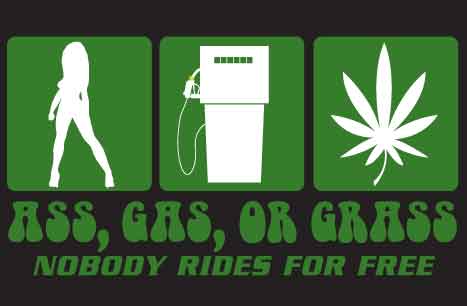
Ass, gas or grass – no one rides for free. So said the once popular bumper sticker.
Unless you drive an EV.
Then you can use the government to force someone else to "help" pay for your ride – and your road. Because you don't have to pay any of the gas taxes that fund the roads.
It's quite a five-fingered discount, too.
Gas taxes – federal and state – tally about 50 cents on average, added to the cost of every gallon of gasoline (and diesel) sold. If your car's tank holds 15 gallons – which is typical – you're paying about $7.50 in taxes every fill-up, regardless of the cost of the gas.
If you fill up twice a week, that's about $30 per month – or $360 annually. Over the course of a six-year new car loan, the bite comes to $2,160.
Owners of vehicles with bigger tanks that use more gas pay more in taxes, obviously. If you have an SUV or pick-up with a 21 gallon tank, each fill-up costs you about $10 in motor fuels taxes, or $40 each month – $480 annually.
$2,880 over six years.
But EV owners don't pay a red cent. This includes Ludicrous Speed energy hogs like the Tesla S – which burn up lots of untaxed electricity.