










Breaking News
 'UNFAIR': Mamdani's city-run grocer plan SLAPPED with lawsuit
 Trump Says If Iran Had a Nuclear Weapon, He Would Have Politely Called the Supreme Leader...
 Tucker Carlson: We are on the brink of a world war that ends with the use of nuclear weapons
 Who is trying to destroy the United States and the world?
Top Tech News
 NASA Super Light Solar Sail Project Will Be 12-40 Times Lighter and Faster
 Space Telescope Interferometer to Image Exoplanet Continents
 Twenty-five years of "temporary": how 9/11 built a surveillance state Americans never vote
 I'll Never Buy Another WALMART Battery!
 Shoei GT-Air 3 Smart helmet drops with built-in AR for $1,500
 Freezable titanium plate keeps your cooler chilled way longer than ice packs
 Review: Affordable thermal device is made for discovering life outdoors
 AI Whistleblower Tells Tucker How AI Could Kill All Humans by 2040
 You Hate Flock? Well There's More...
 Will Spiking Diesel Prices Drive Autonomous Trucking?



Port Of Auckland Orders World's First Full-Size Electric Tug
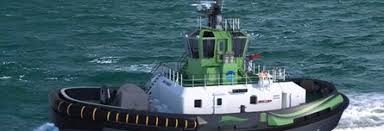
Most of the electrification efforts are currently put into cars, but there is a huge appetite to electrify ships too.
Ports of Auckland in New Zealand since 2016 has been working on the idea of an electric tug. As there were no such products on the market, Dutch company Damen Shipyards decided to develop a full-size, 70-tonne bollard pull, electric tug. The first such unit, called Damen RSD-E Tug 2513, will be delivered to Ports of Auckland in 2021.
To meet the performance of the port's strongest diesel tug Hauraki, also built by Damen, the RSD-E Tug 2513 will need a few MWh of batteries. It will be able to do 3-4 operations (usually in 3-4 hours) and then recharge over of a period of two hours.
Tony Gibson, CEO of Ports of Auckland said:
"It was important to us that a new electric tug should be able to carry out normal port operations, just like our existing diesel tugs. Our new e-tug will be able to do three to four shipping moves on a full charge, or around three to four hours work (one shipping move takes an hour on average). A fast charge will take about two hours. This is just what we need."