










Breaking News
 15 Years After Occupy, the Case Against the System Has Never Been Clearer
 8 Prepper Hacks for Cleaning Without Running Water
 The Economy Is Stagnating
 Britain To Appoint A Dedicated Tax Agent To Every Single Billionaire
Top Tech News
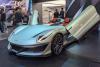 Tesla Model 3 killer charges from 10 to 97% in just 9 minutes
 World-first unpowered DNA computer sets speed record
 I Power 5 Buildings Off-Grid. Here's How
 The US government is pushing hard to get a working nuclear fission reactor into space by late 2028
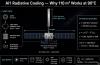 SpaceX Starmind AI in Space Radiator
 China Will Dominate Global Nuclear Energy Through 2035, Analyst Says
 These Absolutely Wild-Looking EVs Are Saudi Arabia's First Homegrown Cars
 BEYOND THE MOON: NASA plans a nuclear-powered fleet to push DEEPER into space
 Big Oil Backs Mazama's $135 Million Bet On Superhot Geothermal
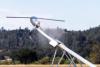 Quantum compass takes flight on Northrop's Lumberjack drone


REE re-invents the wheel, and plans a complete disruption of the auto industry
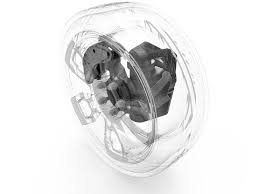
REE CEO and co-founder Daniel Barel has been through a number of startup phases, most notably bringing the SoftWheel to market internationally. But for the last six or so years, he and the REE team have been in stealth mode working on a completely new approach to the entire automotive segment, that could prove to be his biggest contribution yet.
Electric cars, thought Barel, shouldn't be constrained by the forms and solutions that combustion cars have evolved into over more than a century of development. Old-school mechanical thinking around steering, motors, transmissions and suspension is due for a complete re-think – the kind of re-think that's too revolutionary to come from within the automotive industry itself.
So Barel began assembling a team to pull off an audacious plan: to develop a completely modular, hyper-flexible electric vehicle platform that could be used for anything from a golf kart, a supercar or a delivery van to a 10-ton truck or a high-performance off-road vehicle. And to completely clear out all the space under the hood, handling every mechanical function from steering and suspension to motor, transmission, brakes and cooling in a super-compact, modular unit that lives in each wheel bay.