










Breaking News
 China's gold rush is becoming impossible to ignore.
 A 3-year-old boy had an 11 cm liver tumor...
 Bazoka incoming…
 15 Years After Occupy, the Case Against the System Has Never Been Clearer
Top Tech News
 Tesla Model 3 killer charges from 10 to 97% in just 9 minutes
 World-first unpowered DNA computer sets speed record
 I Power 5 Buildings Off-Grid. Here's How
 The US government is pushing hard to get a working nuclear fission reactor into space by late 2028
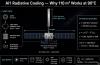 SpaceX Starmind AI in Space Radiator
 China Will Dominate Global Nuclear Energy Through 2035, Analyst Says
 These Absolutely Wild-Looking EVs Are Saudi Arabia's First Homegrown Cars
 BEYOND THE MOON: NASA plans a nuclear-powered fleet to push DEEPER into space
 Big Oil Backs Mazama's $135 Million Bet On Superhot Geothermal
 Quantum compass takes flight on Northrop's Lumberjack drone


Bulletproof metal foam could make military vehicles lighter and more efficient

Yet another comes from researchers at North Carolina State University, who have developed a new type of bulletproof material comparable in performance to conventional armor, at just half the weight.
The team behind the breakthrough was also responsible for an impressive bit of research in 2015, which led to a new kind of lightweight shieldingwith the ability to block X-rays, gamma rays and neutron radiation. A year later, it adapted its approach to produce a high-strength shielding capable of stopping bullets in their tracks. Other research groups have had similar success using graphene.
At the heart of all this is what is known as a composite metal foam (CMF). This can be made by bubbling gas through molten metal to produce a frothy mixture, which can then be cooled to form a lightweight matrix and embedded with hollow, metallic spheres. The result is a material much lighter than conventional metals but with comparable strength.
This time around the team led by Afsaneh Rabiei, a professor of mechanical and aerospace engineering, used this approach to produce a steel CMF embedded with steel spheres. This was then sandwiched in between a ceramic faceplate and a thin aluminum back plate and blasted with rounds of bullets to see how it stood up.