










Breaking News
 China's gold rush is becoming impossible to ignore.
 A 3-year-old boy had an 11 cm liver tumor...
 Bazoka incoming…
 15 Years After Occupy, the Case Against the System Has Never Been Clearer
Top Tech News
 Tesla Model 3 killer charges from 10 to 97% in just 9 minutes
 World-first unpowered DNA computer sets speed record
 I Power 5 Buildings Off-Grid. Here's How
 The US government is pushing hard to get a working nuclear fission reactor into space by late 2028
 SpaceX Starmind AI in Space Radiator
 China Will Dominate Global Nuclear Energy Through 2035, Analyst Says
 These Absolutely Wild-Looking EVs Are Saudi Arabia's First Homegrown Cars
 BEYOND THE MOON: NASA plans a nuclear-powered fleet to push DEEPER into space
 Big Oil Backs Mazama's $135 Million Bet On Superhot Geothermal
 Quantum compass takes flight on Northrop's Lumberjack drone


Rocket engine for the Dream Chaser space plane undergoes first public test-fire
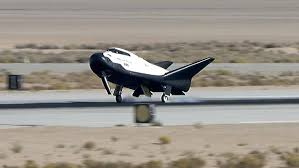
The company has now offered the public the first fiery look at the engine that will propel it through space, with missions for NASA slated to kick off the year after next.
Since its first attempt at gliding test flight left it upside down on the airstrip way back in 2013, the road has been a relatively smooth one for Sierra Nevada's reusable orbital vehicle. That incident led to a total refurbishment and it then completed its first captive carry test flight in August 2017 where a Chinook helicopter hoisted it into the air, and then its first successful gliding flight and landing test just a few months later.
The Dream Chaser is designed to be launcher agnostic, meaning it could be lifted into space with the help of a number of different rockets. But the propulsion technology Sierra Nevada publicly demonstrated for the first time last week is an upper stage engine, meaning it will ignite at high altitudes and propel vehicles like the Dream Chaser as they travel through the upper parts of the atmosphere.