










Breaking News
 'UNFAIR': Mamdani's city-run grocer plan SLAPPED with lawsuit
 Trump Says If Iran Had a Nuclear Weapon, He Would Have Politely Called the Supreme Leader...
 Tucker Carlson: We are on the brink of a world war that ends with the use of nuclear weapons
 Who is trying to destroy the United States and the world?
Top Tech News
 NASA Super Light Solar Sail Project Will Be 12-40 Times Lighter and Faster
 Space Telescope Interferometer to Image Exoplanet Continents
 Twenty-five years of "temporary": how 9/11 built a surveillance state Americans never vote
 I'll Never Buy Another WALMART Battery!
 Shoei GT-Air 3 Smart helmet drops with built-in AR for $1,500
 Freezable titanium plate keeps your cooler chilled way longer than ice packs
 Review: Affordable thermal device is made for discovering life outdoors
 AI Whistleblower Tells Tucker How AI Could Kill All Humans by 2040
 You Hate Flock? Well There's More...
 Will Spiking Diesel Prices Drive Autonomous Trucking?



Out of thin air: New electrochemical process shortens the path to capturing and recycling CO2
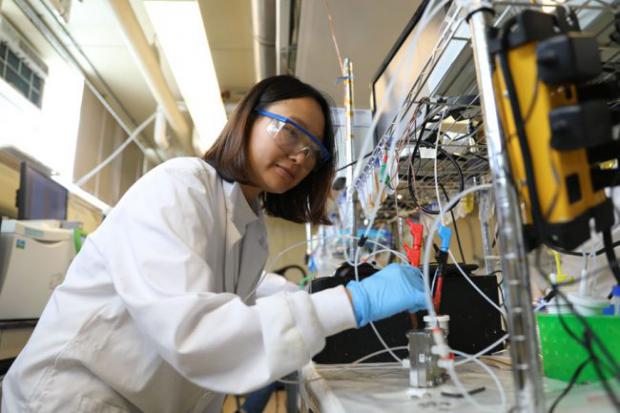
A research team from U of T Engineering has developed a new electrochemical path to transform carbon dioxide (CO2) into valuable products such as jet fuel or plastics. The technology could significantly improve the economics of capturing and recycling carbon directly from the air. "Today, it is technically possible to capture CO2 from air and, through a number of steps, convert it to commercial products," says Professor Ted Sargent (ECE) who led the research team. "The challenge is that it takes a lot of energy to do so, which raises the cost and lowers the incentive. Our strategy increases the overall energy efficiency by avoiding some of the more energy-intensive losses." Direct-air carbon capture is an emerging technology whereby companies aim to produce fuels or plastics from carbon that is already in the atmosphere, rather than from fossil fuels. Canadian company Carbon Engineering, which has built a pilot plant in Squamish, B.C., captures CO2 by forcing air thro