










Breaking News
 'UNFAIR': Mamdani's city-run grocer plan SLAPPED with lawsuit
 Trump Says If Iran Had a Nuclear Weapon, He Would Have Politely Called the Supreme Leader...
 Tucker Carlson: We are on the brink of a world war that ends with the use of nuclear weapons
 Who is trying to destroy the United States and the world?
Top Tech News
 NASA Super Light Solar Sail Project Will Be 12-40 Times Lighter and Faster
 Space Telescope Interferometer to Image Exoplanet Continents
 Twenty-five years of "temporary": how 9/11 built a surveillance state Americans never vote
 I'll Never Buy Another WALMART Battery!
 Shoei GT-Air 3 Smart helmet drops with built-in AR for $1,500
 Freezable titanium plate keeps your cooler chilled way longer than ice packs
 Review: Affordable thermal device is made for discovering life outdoors
 AI Whistleblower Tells Tucker How AI Could Kill All Humans by 2040
 You Hate Flock? Well There's More...
 Will Spiking Diesel Prices Drive Autonomous Trucking?



Chinese startup begins mass-producing self-driving delivery vans...
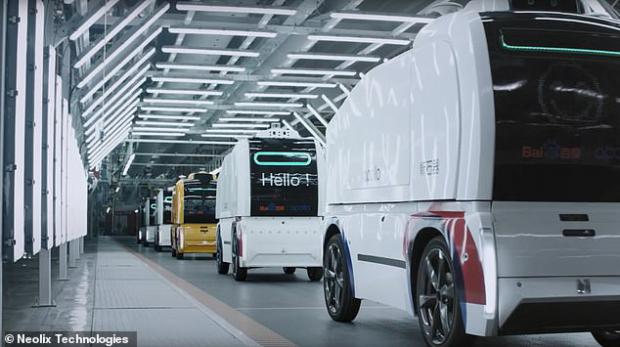
According to a report from Bloomberg, the company Neolix has begun production on 1,000 level four autonomous vehicles that it plans to roll out in China throughout the next year.
The tiny vans, which are essentially four-wheeled robots outfitted with trunks for storage, are capable of navigating their environment without any human pilot and have already garnered interest from two of China's biggest retailers: Huawei and JD.com.
Neolix's robotic courier will cost around $30,000 each and could usher in a new era for e-commerce in China where companies like Alibaba have exploded in scope. In 2019 alone, Alibaba has generated about $152 billion.
According to experts, throughout the next ten years, delivery volumes will likely only continue to balloon, reaching 1 billion per day as per a report from the South China Morning Post.
While Neolix may be the first company worldwide to begin mass producing its autonomous delivery vehicles -- it's factory has a capacity of about 30,000 vehicles per year -- it is not alone in the space.