










Breaking News
 China's gold rush is becoming impossible to ignore.
 A 3-year-old boy had an 11 cm liver tumor...
 Bazoka incoming…
 15 Years After Occupy, the Case Against the System Has Never Been Clearer
Top Tech News
 Tesla Model 3 killer charges from 10 to 97% in just 9 minutes
 World-first unpowered DNA computer sets speed record
 I Power 5 Buildings Off-Grid. Here's How
 The US government is pushing hard to get a working nuclear fission reactor into space by late 2028
 SpaceX Starmind AI in Space Radiator
 China Will Dominate Global Nuclear Energy Through 2035, Analyst Says
 These Absolutely Wild-Looking EVs Are Saudi Arabia's First Homegrown Cars
 BEYOND THE MOON: NASA plans a nuclear-powered fleet to push DEEPER into space
 Big Oil Backs Mazama's $135 Million Bet On Superhot Geothermal
 Quantum compass takes flight on Northrop's Lumberjack drone


Movo robot is armed for research
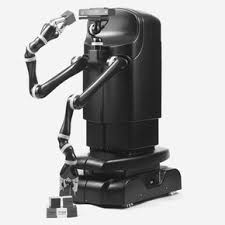
Like the PR2, the Movo can be equipped with either one or two arms, and moves omnidirectionally (at a maximum speed of 2 meters/78.8 inches per second) on a set of wheels in its base. The arms can be removed for use on their own, and can be equipped with either 2- or 3-fingered grippers. And should the robot need to get taller for any reason, its torso can telescope up from a height of 1,100 to 1,580 mm (43 to 62 in).
It's possible to remotely-control the Wi-Fi-enabled robot in real time, or it can operate autonomously. A LiDAR unit in its base, along with a gimbal-mounted depth-sensing Kinect One camera on its head, allow it to detect obstacles and perceive its environment. An Intel CPU, meanwhile, helps it to make sense of everything, and to coordinate its movements.