










Breaking News
 This is the future we shall bring into being
 Elon Musk's Vision For The Future Looks Like A Movie
 Phosphorus Munitions Fired by Israel Burn Groves, Orchards in Southern Lebanon
 Iran's IRGC Warns It Will Expand 'Geography of the War' If the US Attacks Again
Top Tech News
 BEYOND THE MOON: NASA plans a nuclear-powered fleet to push DEEPER into space
 Big Oil Backs Mazama's $135 Million Bet On Superhot Geothermal
 Quantum compass takes flight on Northrop's Lumberjack drone
 Terrifying AI Behavior Even Its Creators Couldn't Explain
 WW3 Near-Miss? AI Hallucinated Nuclear Weapons Components Aboard Chinese Vessel Bound For Iran
 Stripe Is Building the Toll Road for the Machine Economy
 Toyota Dakar hopeful swaps twin-turbo V6 for hydrogen fuel cells
 4-min turbo-inflatable cubic camp castle is now available in the USA
 Researchers Used Claude To Hack OpenAI Employee Accounts
 Chinese Scientists Develop New Oil Refining Method That Cuts Energy Use by 90%



ESA dives into development of deep-space airlock for the Gateway outpost
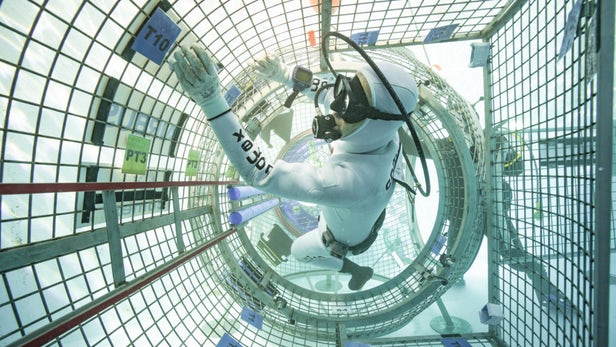
If and when the Gateway outpost is deployed in 2023, it will need an airlock to get any useful work done, so ESA is working on a new egress point for scientific experiments for the cislunar manned laboratory. Based on two independent approaches by Airbus and Thales Alenia Space, the final design will be part of the European module ESPRIT, which will also provide telecommunications and spacecraft refueling capabilities.
An airlock seems like a simple enough thing. It's a box with a pair of doors that can't both be opened at the same time while one is under pressure. It allows astronauts and equipment to enter and leave a spacecraft by equalizing pressure in the chamber without having to depressurize or pressurize the entire vehicle.
But designing one isn't that easy. Such airlocks tend to be cramped, full of equipment, and present all sorts of ergonomic problems – especially for weightless astronauts. To overcome this, ESA is currently testing a full-size mock-up of one of the airlocks built by Comex for Airbus in a swimming pool in Marseilles, France.
