










Breaking News
 NatGas Spikes As Major West Virginia Pipeline Declares Force Majeure
 White House Restores Access For Banned Media Outlets After Judge's Ruling
 Iran Media Reports Tehran Stance 'Unchanged' Amid US Talks At UN
 This "ETFE" Dome Costs $4,200 and Resists High Heat, UVs and Weathering. Why It's Ide
Top Tech News
 Tesla Model 3 killer charges from 10 to 97% in just 9 minutes
 World-first unpowered DNA computer sets speed record
 I Power 5 Buildings Off-Grid. Here's How
 The US government is pushing hard to get a working nuclear fission reactor into space by late 2028
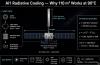 SpaceX Starmind AI in Space Radiator
 China Will Dominate Global Nuclear Energy Through 2035, Analyst Says
 These Absolutely Wild-Looking EVs Are Saudi Arabia's First Homegrown Cars
 BEYOND THE MOON: NASA plans a nuclear-powered fleet to push DEEPER into space
 Big Oil Backs Mazama's $135 Million Bet On Superhot Geothermal
 Quantum compass takes flight on Northrop's Lumberjack drone


Virgin Galactic spaceplane reaches space with first passenger on board
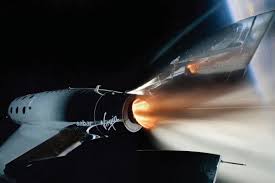
Tourism venture Virgin Galactic sent its spaceplane into space for the second time this morning, qualifying all three people on the flight for their commercial astronaut wings. One of those riders was Virgin Galactic's first test passenger, Beth Moses, the chief astronaut instructor at Virgin Galactic, who flew along with the vehicle's two pilots. She's also Virgin Galactic's first female flyer.
Virgin Galactic's spaceplane, the VSS Unity, is designed to take passengers to the edge of space where they can experience a few minutes of weightlessness. But up until the end of last year, the vehicle had yet to breach Earth's atmosphere. That changed in December when Virgin Galactic made history by sending VSS Unity to a height of 51.4 miles (82.7 kilometers), an altitude that many (but not all) consider to be the start of space. For those who adhere to that definition, it was the first time that people had launched to space from the US since 2011. As a result, the two pilots of the December flight received astronaut wings from the Federal Aviation Administration in early February.