










Breaking News
 This is the future we shall bring into being
 Elon Musk's Vision For The Future Looks Like A Movie
 Phosphorus Munitions Fired by Israel Burn Groves, Orchards in Southern Lebanon
 Iran's IRGC Warns It Will Expand 'Geography of the War' If the US Attacks Again
Top Tech News
 BEYOND THE MOON: NASA plans a nuclear-powered fleet to push DEEPER into space
 Big Oil Backs Mazama's $135 Million Bet On Superhot Geothermal
 Quantum compass takes flight on Northrop's Lumberjack drone
 Terrifying AI Behavior Even Its Creators Couldn't Explain
 WW3 Near-Miss? AI Hallucinated Nuclear Weapons Components Aboard Chinese Vessel Bound For Iran
 Stripe Is Building the Toll Road for the Machine Economy
 Toyota Dakar hopeful swaps twin-turbo V6 for hydrogen fuel cells
 4-min turbo-inflatable cubic camp castle is now available in the USA
 Researchers Used Claude To Hack OpenAI Employee Accounts
 Chinese Scientists Develop New Oil Refining Method That Cuts Energy Use by 90%



"Metallic wood" makes nickel as strong as titanium, but five times lighter
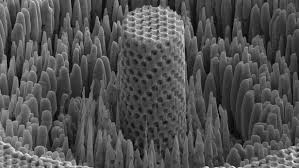
By manipulating materials at the atomic scale, scientists from the University of Pennsylvania's School of Engineering and Applied Science, the University of Illinois at Urbana–Champaign, and the University of Cambridge claim to have created a sheet of nickel that is as strong as titanium, but up to five times lighter.
Strong as steel is a cliché, but it's one that's true. Steel is so strong and so affordable that it's hard for the average person to go through their day without seeing tons of it in the form of bridges, vehicles, building supports, and reinforced concrete, just to name a very few examples.
However, steel and other metals that we use on an everyday basis aren't anywhere near as strong as they could be. The crystalline structure that make up metals like steel, aluminum, and titanium give them their strength and flexibility, but this structure is imperfect, so the forces applied to the metals under stress cause the atoms in them to slip and the structure to fail far below the metal's theoretical strength limit. Titanium, for example, would be 10 times stronger if it had an ideal structure.