










Breaking News
 This is the future we shall bring into being
 Elon Musk's Vision For The Future Looks Like A Movie
 Phosphorus Munitions Fired by Israel Burn Groves, Orchards in Southern Lebanon
 Iran's IRGC Warns It Will Expand 'Geography of the War' If the US Attacks Again
Top Tech News
 BEYOND THE MOON: NASA plans a nuclear-powered fleet to push DEEPER into space
 Big Oil Backs Mazama's $135 Million Bet On Superhot Geothermal
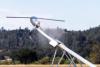 Quantum compass takes flight on Northrop's Lumberjack drone
 Terrifying AI Behavior Even Its Creators Couldn't Explain
 WW3 Near-Miss? AI Hallucinated Nuclear Weapons Components Aboard Chinese Vessel Bound For Iran
 Stripe Is Building the Toll Road for the Machine Economy
 Toyota Dakar hopeful swaps twin-turbo V6 for hydrogen fuel cells
 4-min turbo-inflatable cubic camp castle is now available in the USA
 Researchers Used Claude To Hack OpenAI Employee Accounts
 Chinese Scientists Develop New Oil Refining Method That Cuts Energy Use by 90%



Looking for Prior Industrial Civilizations in the Geological Record

Researchers summarize the likely geological fingerprint of the Anthropocene, and demonstrate that while clear, it will not differ greatly in many respects from other known events in the geological record. They propose tests that could plausibly distinguish an industrial cause from an otherwise naturally occurring climate event.
The researchers define industrial civilizations here as the ability to harness external energy sources at global scales.
One of the key questions in assessing the likelihood of finding such a civilization is an understanding of how often, given that life has arisen and that some species are intelligent, does an industrial civilization develop? Humans are the only example we know of, and our industrial civilization has lasted about 300 years so far. This is a small fraction of the time we have existed as a species, and a tiny fraction of the time that complex life has existed on the Earth's land surface. Complex life has existed for about ∼400 million years ago. This short time period raises the obvious question as to whether this could have happened before. They call this the "Silurian Hypothesis". It is named after a story and species in Dr Who.