










Breaking News
 Who Will Find What the Finders Hide? Addendum
 Seven Days in the Dark: How I Watched My Neighbors Turn Into Thieves...
 Oracle Invokes Force Majeure on Project Jupiter AI Data Center
 Something to Know About Saaaaaaafety
Top Tech News
 Tesla Model 3 killer charges from 10 to 97% in just 9 minutes
 World-first unpowered DNA computer sets speed record
 I Power 5 Buildings Off-Grid. Here's How
 The US government is pushing hard to get a working nuclear fission reactor into space by late 2028
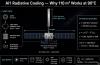 SpaceX Starmind AI in Space Radiator
 China Will Dominate Global Nuclear Energy Through 2035, Analyst Says
 These Absolutely Wild-Looking EVs Are Saudi Arabia's First Homegrown Cars
 BEYOND THE MOON: NASA plans a nuclear-powered fleet to push DEEPER into space
 Big Oil Backs Mazama's $135 Million Bet On Superhot Geothermal
 Quantum compass takes flight on Northrop's Lumberjack drone


China 'lifts mysterious veil' by landing probe on far side of the moon
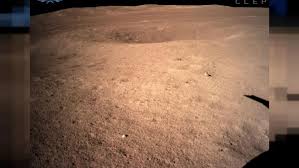
The Chang'e-4 lunar probe, launched in December, made the "soft landing" at 0226 GMT and transmitted the first-ever "close range" image of the far side of the moon, the China National Space Administration said.
The moon is tidally locked to Earth, rotating at the same rate as it orbits our planet, so most of the far side - or "dark side" - is never visible to us. Previous spacecraft have seen the far side, but none has landed on it.
The landing "lifted the mysterious veil" of the far side of the moon and "opened a new chapter in human lunar exploration", the agency said in a statement on its website, which included a wide-angle colour picture of a crater from the moon's surface.
The probe, which has a lander and a rover, touched down at a targeted area near the moon's south pole in the Von Karman Crater after entering the moon's orbit in mid-December.