










Breaking News
 Who Will Find What the Finders Hide? Addendum
 Seven Days in the Dark: How I Watched My Neighbors Turn Into Thieves...
 Oracle Invokes Force Majeure on Project Jupiter AI Data Center
 Something to Know About Saaaaaaafety
Top Tech News
 Tesla Model 3 killer charges from 10 to 97% in just 9 minutes
 World-first unpowered DNA computer sets speed record
 I Power 5 Buildings Off-Grid. Here's How
 The US government is pushing hard to get a working nuclear fission reactor into space by late 2028
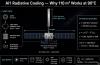 SpaceX Starmind AI in Space Radiator
 China Will Dominate Global Nuclear Energy Through 2035, Analyst Says
 These Absolutely Wild-Looking EVs Are Saudi Arabia's First Homegrown Cars
 BEYOND THE MOON: NASA plans a nuclear-powered fleet to push DEEPER into space
 Big Oil Backs Mazama's $135 Million Bet On Superhot Geothermal
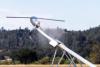 Quantum compass takes flight on Northrop's Lumberjack drone


EXCLUSIVE - The year paralyzed people walked again: Two patients who made...
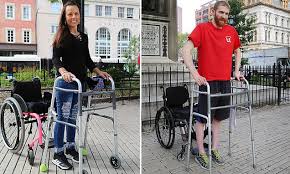
Two years ago, this story would have been science fiction.
Kelly Thomas, 24, who is paralyzed from the chest down, pulls herself up to standing, takes one step, moves her walker a little bit ahead of her, and then takes another step.
Jeff Marquis, 35, whose legs, feet and hands are paralyzed, winces as he pulls himself up to stand, the gingerly steps forward.
The gaggle of people around them gasp.
'Eventually I want to get rid of the walker and get faster,' Thomas says. 'I think that's gonna come with just walking more and more.'
Astonishingly, she's right.
Thomas and Marquis are two of just three paralyzed patients who can walk again thanks to a device implanted in their spines and intense physical therapy.