










Breaking News
 Who Will Find What the Finders Hide? Addendum
 Seven Days in the Dark: How I Watched My Neighbors Turn Into Thieves...
 Oracle Invokes Force Majeure on Project Jupiter AI Data Center
 Something to Know About Saaaaaaafety
Top Tech News
 Tesla Model 3 killer charges from 10 to 97% in just 9 minutes
 World-first unpowered DNA computer sets speed record
 I Power 5 Buildings Off-Grid. Here's How
 The US government is pushing hard to get a working nuclear fission reactor into space by late 2028
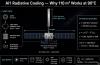 SpaceX Starmind AI in Space Radiator
 China Will Dominate Global Nuclear Energy Through 2035, Analyst Says
 These Absolutely Wild-Looking EVs Are Saudi Arabia's First Homegrown Cars
 BEYOND THE MOON: NASA plans a nuclear-powered fleet to push DEEPER into space
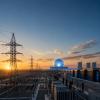 Big Oil Backs Mazama's $135 Million Bet On Superhot Geothermal
 Quantum compass takes flight on Northrop's Lumberjack drone


This most innovative battery designs of the year
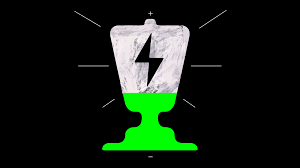
How we store that energy is a constant work in progress, and while plenty of scientists are making important but incremental advances with inventive new materials and electrolytes, others are out to entirely reinvent what we think of as a battery. Here are five examples from 2018 that might open up new doorways in energy storage, and are thought-provoking concepts that came from thinking outside the square.
Consider a regular spring. If you coil that spring with your finger, you are packing it with potential energy. If you then allow it to uncoil, you are letting that energy free. Now imagine that principle applied to a tower of stackable concrete blocks, with a six-armed crane acting as the finger.
This is the vision of Swiss startup Energy Vault, which is developing a new kind of battery, if you can call it that, designed to store energy from renewables like wind and solar in skyscraper-sized concrete towers. To charge it, the crane lifts blocks off the ground and stacks them to create a tower. To discharge it, the crane lets gravity lower the blocks to the ground and converts the kinetic energy generated during the descent into electricity.
This is a similar premise to pumped hydro plants, which are commonplace and also rely on gravity. These pump water up to into a reservoir during periods of low grid demand, and then capture the power generated as it is released to rush downhill through turbines. Energy Vault says its solution could hold a capacity of up to 35 MWh and 4 MW peak power and offer a roundtrip efficiency of 90 percent. It is deploying its first system in India in 2019.