










Breaking News
 This is the future we shall bring into being
 Elon Musk's Vision For The Future Looks Like A Movie
 Phosphorus Munitions Fired by Israel Burn Groves, Orchards in Southern Lebanon
 Iran's IRGC Warns It Will Expand 'Geography of the War' If the US Attacks Again
Top Tech News
 BEYOND THE MOON: NASA plans a nuclear-powered fleet to push DEEPER into space
 Big Oil Backs Mazama's $135 Million Bet On Superhot Geothermal
 Quantum compass takes flight on Northrop's Lumberjack drone
 Terrifying AI Behavior Even Its Creators Couldn't Explain
 WW3 Near-Miss? AI Hallucinated Nuclear Weapons Components Aboard Chinese Vessel Bound For Iran
 Stripe Is Building the Toll Road for the Machine Economy
 Toyota Dakar hopeful swaps twin-turbo V6 for hydrogen fuel cells
 4-min turbo-inflatable cubic camp castle is now available in the USA
 Researchers Used Claude To Hack OpenAI Employee Accounts
 Chinese Scientists Develop New Oil Refining Method That Cuts Energy Use by 90%



How George H.W. Bush Rode a Fake National Security Scandal to the Top of the CIA
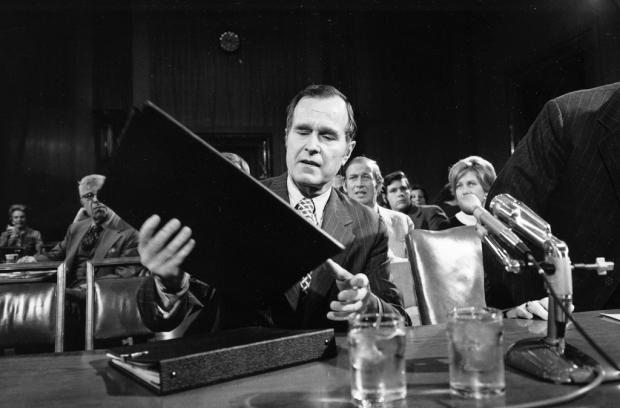
It wasn't going to be a slam dunk.
The Democrats had a huge majority in the Senate, and many were still angry over Bush's role as a partisan apologist for former President Richard Nixon, who had resigned the year before as a result of the Watergate scandal. What's more, in the wake of disclosures in the press of pervasive domestic spying by the CIA, the Senate had launched its first aggressive investigation into alleged abuses by the U.S. intelligence community.
Beginning in January 1975, the Church Committee, named for its chair, Idaho Democratic Sen. Frank Church, unearthed one scandal after another at the CIA, the FBI, and the National Security Agency. Long-hidden covert programs, including a series of plots to kill foreign leaders like Cuba's Fidel Castro and the Congo's Patrice Lumumba, had been exposed, rocking the CIA. By late 1975, the agency's public standing was at a low ebb, and the CIA and White House officials in the administration of President Gerald Ford were increasingly worried about the political impact of the disclosures.