










Breaking News
 This is the future we shall bring into being
 Elon Musk's Vision For The Future Looks Like A Movie
 Phosphorus Munitions Fired by Israel Burn Groves, Orchards in Southern Lebanon
 Iran's IRGC Warns It Will Expand 'Geography of the War' If the US Attacks Again
Top Tech News
 BEYOND THE MOON: NASA plans a nuclear-powered fleet to push DEEPER into space
 Big Oil Backs Mazama's $135 Million Bet On Superhot Geothermal
 Quantum compass takes flight on Northrop's Lumberjack drone
 Terrifying AI Behavior Even Its Creators Couldn't Explain
 WW3 Near-Miss? AI Hallucinated Nuclear Weapons Components Aboard Chinese Vessel Bound For Iran
 Stripe Is Building the Toll Road for the Machine Economy
 Toyota Dakar hopeful swaps twin-turbo V6 for hydrogen fuel cells
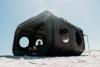 4-min turbo-inflatable cubic camp castle is now available in the USA
 Researchers Used Claude To Hack OpenAI Employee Accounts
 Chinese Scientists Develop New Oil Refining Method That Cuts Energy Use by 90%



Richard Branson launches $3m challenge to reinvent the air conditioner

As the world continues to warm, you can expect more and more folks to be turning to air conditioners to keep their living environments cool and comfortable. And in that sense, this energy-intensive technology will do plenty to exacerbate the very problem it is designed to solve. The Global Cooling Prize is a competition to help stop runaway climate change, by dangling US$3 million in prize money for the development of more energy-efficient cooling solutions.
The Global Cooling Prize is backed by the Indian government among other partners, with Richard Branson taking on the ambassadorial duties. The organizers make a pretty compelling case regarding the need for a rethink in how we currently cool our homes. They say that there are around 1.2 billion room air conditioning units in action around the world today, and the most efficient of these operate at around 14 percent of the maximum theoretical efficiency. As a comparison, investments in R&D have led to products like LED lights that operate at up to 89 percent efficiency.
Meanwhile, a further 3.3 billion room air conditioners are expected to be installed between now and 2050, with little being done to make them more efficient. According to the competition organizers, this is because the industry focuses on lowering individual unit costs at the point of sale rather than their running costs (and energy usage) over time.
So, this is where they see an opportunity to shake things up. Much like the XPrize competitions that seek to inspire technological solutions to societal problems, the Global Cooling Prize will offer up some serious prize money for inventors who can meet a set of carefully designed criteria.
Entrants are tasked with developing an air-cooling technology that can be installed in existing homes and have five times less climate impact than a current baseline unit, at no more than twice the cost. Its power consumption at full load must not exceed 700 W and it mustn't consume more than 14 L (3.7 gal) of water per day.