










Breaking News
 "Begin Preparing Yourself..." - Jeffrey Sachs
 The 5-Year Treasury Just Broke 5%... The Whole Curve Is Next
 ICE Denounced for Enacting 'Official Government Policy of Disappearing People'
 Google Just Told Canadian Adults: Give Us Your ID and a Selfie Or Else…And It's Starting Now!!
Top Tech News
 Tesla Model 3 killer charges from 10 to 97% in just 9 minutes
 World-first unpowered DNA computer sets speed record
 I Power 5 Buildings Off-Grid. Here's How
 The US government is pushing hard to get a working nuclear fission reactor into space by late 2028
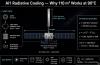 SpaceX Starmind AI in Space Radiator
 China Will Dominate Global Nuclear Energy Through 2035, Analyst Says
 These Absolutely Wild-Looking EVs Are Saudi Arabia's First Homegrown Cars
 BEYOND THE MOON: NASA plans a nuclear-powered fleet to push DEEPER into space
 Big Oil Backs Mazama's $135 Million Bet On Superhot Geothermal
 Quantum compass takes flight on Northrop's Lumberjack drone


Spaceplanes authorized for Cape Canaveral and Stratolaunch has engine success
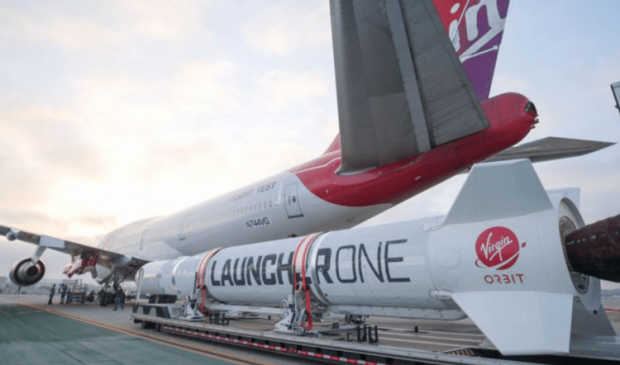
This landmark license expands the capabilities of the Cape to multiple horizontal launch and landing customers.
The license allows the Cape Canaveral Spaceport to support operations of aircraft that carry an air-launched vehicle such as the Northrop Grumman Pegasus, Vulcan Systems' Stratolaunch, Virgin Orbit Launcher One, Virgin Galactic Spaceship 2, potential new national security programs and others.
Cape Canaveral Spaceport has a 15,000-foot runway. It was used for more than 130 Space Shuttle landings.
Fully designed and developed by Stratolaunch, the PGA Engine is a high-performing, liquid rocket engine that, once completed, will produce 200,000 lbf of thrust. The hydrogen-oxygen engine will have the highest specific impulse of any rocket engine propellant.
Designed, fabricated, assembled and tested in less than one year, the full-scale hydrogen preburner will be one of the fastest engine development programs to-date. The team has successfully completed propellant cold flows, igniter activation, and hot-fire sequence development, all culminating to the hot-fire tests.