










Breaking News
 "Begin Preparing Yourself..." - Jeffrey Sachs
 The 5-Year Treasury Just Broke 5%... The Whole Curve Is Next
 ICE Denounced for Enacting 'Official Government Policy of Disappearing People'
 Google Just Told Canadian Adults: Give Us Your ID and a Selfie Or Else…And It's Starting Now!!
Top Tech News
 Tesla Model 3 killer charges from 10 to 97% in just 9 minutes
 World-first unpowered DNA computer sets speed record
 I Power 5 Buildings Off-Grid. Here's How
 The US government is pushing hard to get a working nuclear fission reactor into space by late 2028
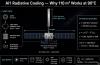 SpaceX Starmind AI in Space Radiator
 China Will Dominate Global Nuclear Energy Through 2035, Analyst Says
 These Absolutely Wild-Looking EVs Are Saudi Arabia's First Homegrown Cars
 BEYOND THE MOON: NASA plans a nuclear-powered fleet to push DEEPER into space
 Big Oil Backs Mazama's $135 Million Bet On Superhot Geothermal
 Quantum compass takes flight on Northrop's Lumberjack drone


The Daily: Consensys Acquires Planetary Resources, New Zealand Backs Crypto R&D

Consensys, the software company established by Ethereum co-founder Joseph Lubin, has acquired struggling space startup Planetary Resources. The New York-based company said it will now operate its "space initiatives" out of Planetary Resources' former facility in Redmond, Washington. The two sides did not share the financial details of the asset-purchase transaction, but it is safe to assume Consensys didn't pay a lot.
When Planetary Resources was launched in 2012, the company promised to usher in an age of private entrepreneurship in the solar system. It said that it planned to expand humanity's access to metals and minerals worth trillions of dollars and received the backing of many notable tech figures, such as Google's Larry Page and Eric Schmidt. However, by the start of this year, the company had failed to secure much-needed additional funding, leading to its decision to downsize its workforce and indefinitely delay its first asteroid-prospecting mission. Now it will be up to Lubin to prove he can become the Elon Musk of the cryptocurrency world by reviving Planetary Resources.
"Bringing deep space capabilities into the Consensys ecosystem reflects our belief in the potential for Ethereum to help humanity craft new societal rule systems through automated trust and guaranteed execution," Lubin said. "And it reflects our belief in democratizing and decentralizing space endeavors to unite our species and unlock untapped human potential. We look forward to sharing our plans and how to join us on this journey in the months ahead."
Callaghan Innovation Supports Vimba

Auckland-based cryptocurrency investment platform Mycryptosaver has announced it is changing its name to Vimba. The rebranding decision coincides with the announcement that the New Zealand government's innovation arm, Callaghan Innovation, has agreed to back Vimba with R&D funding. The startup, which was originally founded as Mybitcoinsaver back in 2014, now claims to have 5,616 clients.
"This is a truly significant investment from Callaghan Innovation and a real show of faith in the future of this very exciting asset class," Vimba CEO Sam Blackmore said. "The money will go towards new key features for our expanding service. We will use it to build secure multi-signature crypto wallets for our users and we're also looking into expanding the range of cryptocurrencies available to them — beyond bitcoin and ethereum."
After the investment was announced earlier this week, controversy erupted over reports that the government had spent taxpayers' money on a Bitcoin company. However, Vimba soon issued a clarification stating that Callaghan Innovation had only approved a grant for 40 percent of the estimated cost of one of its projects, which was valued at roughly 315,000 New Zealand dollars in total.