










Breaking News
 "Begin Preparing Yourself..." - Jeffrey Sachs
 The 5-Year Treasury Just Broke 5%... The Whole Curve Is Next
 ICE Denounced for Enacting 'Official Government Policy of Disappearing People'
 Google Just Told Canadian Adults: Give Us Your ID and a Selfie Or Else…And It's Starting Now!!
Top Tech News
 Tesla Model 3 killer charges from 10 to 97% in just 9 minutes
 World-first unpowered DNA computer sets speed record
 I Power 5 Buildings Off-Grid. Here's How
 The US government is pushing hard to get a working nuclear fission reactor into space by late 2028
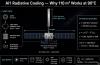 SpaceX Starmind AI in Space Radiator
 China Will Dominate Global Nuclear Energy Through 2035, Analyst Says
 These Absolutely Wild-Looking EVs Are Saudi Arabia's First Homegrown Cars
 BEYOND THE MOON: NASA plans a nuclear-powered fleet to push DEEPER into space
 Big Oil Backs Mazama's $135 Million Bet On Superhot Geothermal
 Quantum compass takes flight on Northrop's Lumberjack drone


In Japan, There's A Down-To-Earth Robot For Just About Everything
Forget the flashy humanoids with their gymnastics skills – at the World Robot Summit in Tokyo, the focus was on down-to-earth robots that can deliver post, do the shopping and build a house.
Introducing CarriRo, a delivery robot shaped a bit like a toy London bus with bright, friendly "eyes" on its front that can zip around the streets delivering packages at 6 kmph.
CarriRo "is designed to roll along the pavements and direct itself via GPS to an address within a 2km radius," explained Chio Ishikawa, from Sumitomo Corp, which is promoting the robot.
The lucky recipient of the package is sent a code to a smartphone allowing him or her to access CarriRo's innards and retrieve whatever is inside – post, medicine or a take-away.
Services like this are especially needed in ageing Japan. With nearly 28 per cent of the population over 65, mobility is increasingly limited and the country is struggling for working-age employees.