










Breaking News
 "Begin Preparing Yourself..." - Jeffrey Sachs
 The 5-Year Treasury Just Broke 5%... The Whole Curve Is Next
 ICE Denounced for Enacting 'Official Government Policy of Disappearing People'
 Google Just Told Canadian Adults: Give Us Your ID and a Selfie Or Else…And It's Starting Now!!
Top Tech News
 Tesla Model 3 killer charges from 10 to 97% in just 9 minutes
 World-first unpowered DNA computer sets speed record
 I Power 5 Buildings Off-Grid. Here's How
 The US government is pushing hard to get a working nuclear fission reactor into space by late 2028
 SpaceX Starmind AI in Space Radiator
 China Will Dominate Global Nuclear Energy Through 2035, Analyst Says
 These Absolutely Wild-Looking EVs Are Saudi Arabia's First Homegrown Cars
 BEYOND THE MOON: NASA plans a nuclear-powered fleet to push DEEPER into space
 Big Oil Backs Mazama's $135 Million Bet On Superhot Geothermal
 Quantum compass takes flight on Northrop's Lumberjack drone


Light, thin VR gloves put wearers in touch with virtual objects
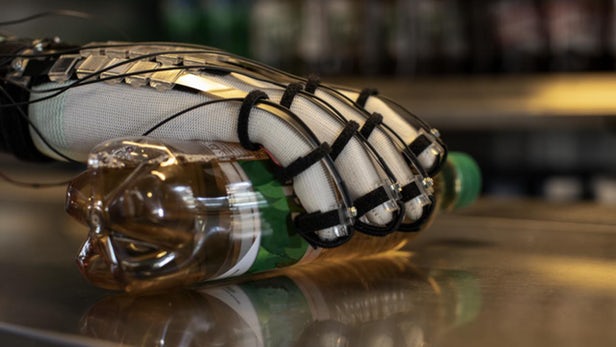
Virtual reality motion controllers work pretty well at syncing up the movements of digital digits with your real ones, but they aren't all that good at recreating the sense of touch. Scientists from EPFL and ETH Zurich have developed new haptic gloves that could help users get in touch with virtual objects.
Haptic feedback systems aren't particularly new. We've seen them crammed into gloves, boots, jackets, and even full-body suits, and made real through vibrating motors, inflatable bladders, electrical fields or just mechanical components that push back.
The new gloves, dubbed DextrES, work using a pretty novel technique. Embedded into the fingers of nylon gloves are strips of an elastic metal with a thin insulator between them. When a virtual object needs to be simulated, a voltage difference is applied to the metal strips, which causes them to stick together. That in turn creates a braking force – the wearer physically can't close their fingers past a certain point, giving them the firm impression that there's something in their hand. When the object is dropped, the voltage is lifted and they can move their fingers freely again.