










Breaking News
 "Begin Preparing Yourself..." - Jeffrey Sachs
 The 5-Year Treasury Just Broke 5%... The Whole Curve Is Next
 ICE Denounced for Enacting 'Official Government Policy of Disappearing People'
 Google Just Told Canadian Adults: Give Us Your ID and a Selfie Or Else…And It's Starting Now!!
Top Tech News
 Tesla Model 3 killer charges from 10 to 97% in just 9 minutes
 World-first unpowered DNA computer sets speed record
 I Power 5 Buildings Off-Grid. Here's How
 The US government is pushing hard to get a working nuclear fission reactor into space by late 2028
 SpaceX Starmind AI in Space Radiator
 China Will Dominate Global Nuclear Energy Through 2035, Analyst Says
 These Absolutely Wild-Looking EVs Are Saudi Arabia's First Homegrown Cars
 BEYOND THE MOON: NASA plans a nuclear-powered fleet to push DEEPER into space
 Big Oil Backs Mazama's $135 Million Bet On Superhot Geothermal
 Quantum compass takes flight on Northrop's Lumberjack drone


Dream Chaser spaceplane successfully completes glide flight and landing
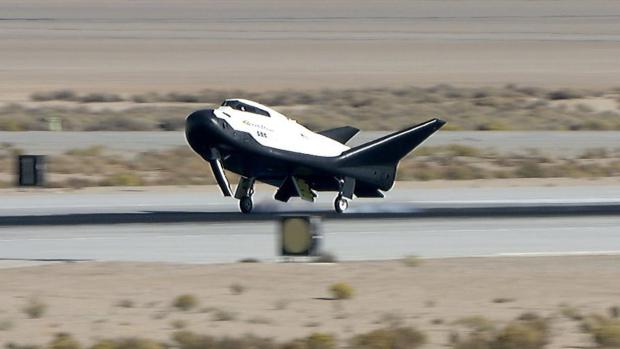
After a recent captive carry test, the Dream Chaser's first successful glide flight and landing marks a significant milestone for the project after a rocky few years of development. Sierra Nevada Corp (SNC) tweeted enthusiastically on Saturday, "The Dream Chaser had a beautiful flight and landing!" following the successful free-flight test carried out on November 11, at NASA's Armstrong Flight Research Center, Edwards, California.
The Dream Chaser is being developed under one of three contracts awarded by NASA in 2016 to resupply the International Space Station (ISS) from 2019 onwards. Unlike the other two capsule-based programs, the Dream Chaser is the only spacecraft capable of landing on a runway, meaning it can not only arrive with ISS research samples at any large-scale commercial airport in the world, but it will also be able to return more precious and fragile research samples that might be otherwise damaged by alternative re-entry methods.
"The Dream Chaser flight test demonstrated excellent performance of the spacecraft's aerodynamic design and the data shows that we are firmly on the path for safe, reliable orbital flight," says Mark Sirangelo, corporate vice president of SNC's Space System business area.