










Breaking News
 "Begin Preparing Yourself..." - Jeffrey Sachs
 The 5-Year Treasury Just Broke 5%... The Whole Curve Is Next
 ICE Denounced for Enacting 'Official Government Policy of Disappearing People'
 Google Just Told Canadian Adults: Give Us Your ID and a Selfie Or Else…And It's Starting Now!!
Top Tech News
 Tesla Model 3 killer charges from 10 to 97% in just 9 minutes
 World-first unpowered DNA computer sets speed record
 I Power 5 Buildings Off-Grid. Here's How
 The US government is pushing hard to get a working nuclear fission reactor into space by late 2028
 SpaceX Starmind AI in Space Radiator
 China Will Dominate Global Nuclear Energy Through 2035, Analyst Says
 These Absolutely Wild-Looking EVs Are Saudi Arabia's First Homegrown Cars
 BEYOND THE MOON: NASA plans a nuclear-powered fleet to push DEEPER into space
 Big Oil Backs Mazama's $135 Million Bet On Superhot Geothermal
 Quantum compass takes flight on Northrop's Lumberjack drone


Japanese mini-rovers send back their first images as they hop around an asteroid
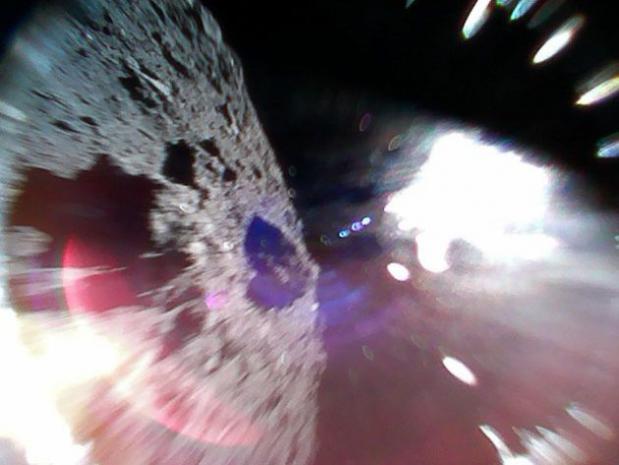
The pictures are blurry because they were taken while the rovers were falling and hopping around the half-mile-wide asteroid, more than 180 million miles from Earth.
As fuzzy as they are, the photos represent a huge victory for the $150 million Hayabusa 2 mission, which was launched nearly four years ago to get an unprecedented look at the surface of an asteroid.
The Japan Aerospace Exploration Agency first tried to put a rover on the surface of an asteroid more than a decade ago, during a mission to a space rock called Itokawa. That part of the mission fizzled, however, when the MINERVA rover carrier missed the mark and sailed off into interplanetary space.