










Breaking News
 "Begin Preparing Yourself..." - Jeffrey Sachs
 The 5-Year Treasury Just Broke 5%... The Whole Curve Is Next
 ICE Denounced for Enacting 'Official Government Policy of Disappearing People'
 Google Just Told Canadian Adults: Give Us Your ID and a Selfie Or Else…And It's Starting Now!!
Top Tech News
 Tesla Model 3 killer charges from 10 to 97% in just 9 minutes
 World-first unpowered DNA computer sets speed record
 I Power 5 Buildings Off-Grid. Here's How
 The US government is pushing hard to get a working nuclear fission reactor into space by late 2028
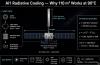 SpaceX Starmind AI in Space Radiator
 China Will Dominate Global Nuclear Energy Through 2035, Analyst Says
 These Absolutely Wild-Looking EVs Are Saudi Arabia's First Homegrown Cars
 BEYOND THE MOON: NASA plans a nuclear-powered fleet to push DEEPER into space
 Big Oil Backs Mazama's $135 Million Bet On Superhot Geothermal
 Quantum compass takes flight on Northrop's Lumberjack drone


Are New York's Free LinkNYC Internet Kiosks Tracking Your Movements?
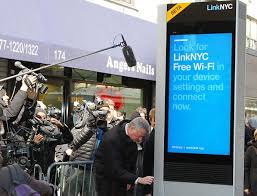
LinkNYC kiosks have become a familiar eyesore to New Yorkers. Over 1,600 of these towering, nine-and-a-half-foot monoliths — their double-sided screens festooned with ads and fun facts — have been installed across the city since early 2016. Mayor Bill de Blasio has celebrated their ability to provide "the fastest and largest municipal Wi-Fi network in the world" as "a critical step toward a more equal, open, and connected city for every New Yorker, in every borough." Anyone can use the kiosks' Android tablets to search for directions and services; they are also equipped with charging stations, 911 buttons, and phones for free domestic calls.
But even as the kiosks have provided important services to connect New Yorkers, they may also represent a troubling expansion of the city's surveillance network, potentially connecting every borough to a new level of invasive monitoring. Each kiosk has three cameras, 30 sensors, and heightened sight lines for viewing above crowds.
Since plans for LinkNYC were first unveiled, journalists, residents, and civil liberties experts have raised concerns that the internet kiosks might be storing sensitive data about its users and possibly tracking their movements. For the last two years, the American Civil Liberties Union, Electronic Frontier Foundation, and a small but vocal group of activists — including ReThink LinkNYC, a grassroots anti-surveillance group, and the anonymous Stop LinkNYC coalition — have highlighted the kiosk's potential to track locations, collect personal information, and fuel mass surveillance.