










Breaking News
 This is the future we shall bring into being
 Elon Musk's Vision For The Future Looks Like A Movie
 Phosphorus Munitions Fired by Israel Burn Groves, Orchards in Southern Lebanon
 Iran's IRGC Warns It Will Expand 'Geography of the War' If the US Attacks Again
Top Tech News
 BEYOND THE MOON: NASA plans a nuclear-powered fleet to push DEEPER into space
 Big Oil Backs Mazama's $135 Million Bet On Superhot Geothermal
 Quantum compass takes flight on Northrop's Lumberjack drone
 Terrifying AI Behavior Even Its Creators Couldn't Explain
 WW3 Near-Miss? AI Hallucinated Nuclear Weapons Components Aboard Chinese Vessel Bound For Iran
 Stripe Is Building the Toll Road for the Machine Economy
 Toyota Dakar hopeful swaps twin-turbo V6 for hydrogen fuel cells
 4-min turbo-inflatable cubic camp castle is now available in the USA
 Researchers Used Claude To Hack OpenAI Employee Accounts
 Chinese Scientists Develop New Oil Refining Method That Cuts Energy Use by 90%



Give Me Liberty or Give Me Property Rights!
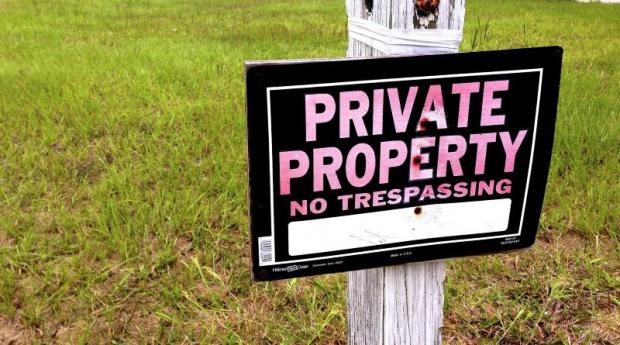
Property, Freedom, and Society: Essays in Honor of Hans-Hermann Hoppe, edited by Jörg Guido Hülsmann and Stephan Kinsella.
Frank van Dun (FvD) offers his view on this question in his essay entitled Freedom and Property: Where They Conflict. If I may summarize his essay in the form of a question: if the objective of libertarian theorizing is anything other than securing freedom, then why are we wasting our time? He wouldn't say it that way, as I suspect he is too much the gentleman. Such concerns rarely stand in my way!
The question may prompt an obvious retort: what is the difference? The non-aggression principle, properly and fully applied, will result in freedom. FvD will disagree.
Libertarian theorists like to trace social and economic problems to coercive, usually government-imposed or sanctioned interventions in the free market or restrictions on the exercise of the libertarian rights of self-ownership, private appropriation and use of material resources, and exchange by mutual consent.
Thus, proper application of the non-aggression principle is all that is necessary for freedom to flourish.  Property, Freedom, and... Jorg Guido Hulsmann Best Price: $12.88 Buy New $14.39 (as of 05:25 EDT - Details)
This is fine as far as it goes—but how far does it go? As we shall see below, respect for the above-mentioned libertarian rights is not in itself sufficient to guarantee the freedom of every person. There may be cases where there is a conflict between claims on behalf of one person's freedom and claims on behalf of another person's private property.
This is one of those "approach with real caution" essays; if one doesn't draw an absolute line around private property, where does one end on the slippery slope to full-blown socialism? By the end of this essay, you will find that I am taking the wimpy way out…at least for this day.
Where there is such conflict, which should prevail: your freedom or my property? I have in the past, and continue to believe today, that your freedom to have me bake a cake for you doesn't trump my property rights in my oven. FvD is working through an issue not as easily solvable as this…but still, the issue of the slippery slope must be recognized and dealt with.
As a libertarian – and for a libertarian – it is difficult to give up on this "freedom as property" notion. First of all, it is the basis for the most effective arguments against government interventions of all sorts (well, second, perhaps, to moral arguments…but few people listen to these). Second, it undercuts the idea that libertarian law is nothing beyond the most rigorous application of the non-aggression principle.
But is the objective property or is it freedom? What happens if there is a conflict, which one wins? If the winner is anything other than property – in every situation – then where does the line get drawn – and how powerful must the line be to avoid sliding down the slippery slope to hell?