










Breaking News
 "Begin Preparing Yourself..." - Jeffrey Sachs
 The 5-Year Treasury Just Broke 5%... The Whole Curve Is Next
 ICE Denounced for Enacting 'Official Government Policy of Disappearing People'
 Google Just Told Canadian Adults: Give Us Your ID and a Selfie Or Else…And It's Starting Now!!
Top Tech News
 Tesla Model 3 killer charges from 10 to 97% in just 9 minutes
 World-first unpowered DNA computer sets speed record
 I Power 5 Buildings Off-Grid. Here's How
 The US government is pushing hard to get a working nuclear fission reactor into space by late 2028
 SpaceX Starmind AI in Space Radiator
 China Will Dominate Global Nuclear Energy Through 2035, Analyst Says
 These Absolutely Wild-Looking EVs Are Saudi Arabia's First Homegrown Cars
 BEYOND THE MOON: NASA plans a nuclear-powered fleet to push DEEPER into space
 Big Oil Backs Mazama's $135 Million Bet On Superhot Geothermal
 Quantum compass takes flight on Northrop's Lumberjack drone


Ultimate Photonic Rocket
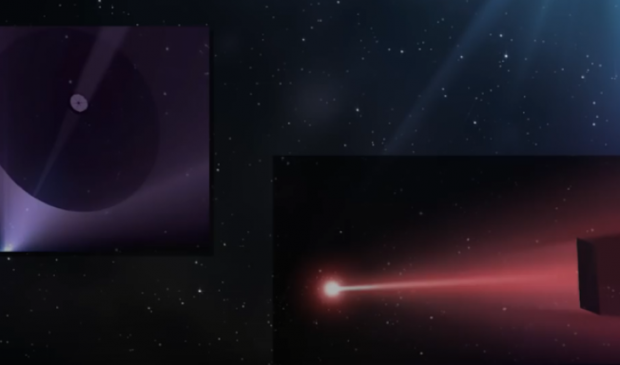
Haug has recently introduced a new maximum velocity for subatomic particles (anything with rest mass) that is just below the speed of light. This is combined with the relativistic rocket equation in order to assess how much fuel would be needed to accelerate an ideal particle rocket to its maximum velocity.
Planck masses of fuel 4.35302 × 10−08 kg.
Max speed for an electron 99.9999999999999999999999999999999999999999999124% of the speed of light
Max speed for a proton 99.999999999999999999999999999999999999705 of the speed of light
The maximum amount of fuel needed for any fully-efficient particle rocket is equal to two Planck masses. This amount of fuel will bring any subatomic particle up to its maximum velocity. At this maximum velocity the subatomic particle will itself turn into a Planck mass particle and likely will explode into energy. Interestingly, we need no fuel to accelerate a fundamental particle that has a rest-mass equal to Planck mass up to its maximum velocity. This is because the maximum velocity of a Planck mass particle is zero as observed from any reference frame. However, the Planck mass particle can only be at rest for an instant. The Planck mass particle can be seen as the very turning point of two light particles; it exists when two light particles collide. Haug's newly-introduced maximum mass velocity equation seems to be fully consistent with application to the relativistic rocket equation and it gives an important new insight into the ultimate limit of fully-efficient particle rockets.