










Breaking News
 This is the future we shall bring into being
 Elon Musk's Vision For The Future Looks Like A Movie
 Phosphorus Munitions Fired by Israel Burn Groves, Orchards in Southern Lebanon
 Iran's IRGC Warns It Will Expand 'Geography of the War' If the US Attacks Again
Top Tech News
 BEYOND THE MOON: NASA plans a nuclear-powered fleet to push DEEPER into space
 Big Oil Backs Mazama's $135 Million Bet On Superhot Geothermal
 Quantum compass takes flight on Northrop's Lumberjack drone
 Terrifying AI Behavior Even Its Creators Couldn't Explain
 WW3 Near-Miss? AI Hallucinated Nuclear Weapons Components Aboard Chinese Vessel Bound For Iran
 Stripe Is Building the Toll Road for the Machine Economy
 Toyota Dakar hopeful swaps twin-turbo V6 for hydrogen fuel cells
 4-min turbo-inflatable cubic camp castle is now available in the USA
 Researchers Used Claude To Hack OpenAI Employee Accounts
 Chinese Scientists Develop New Oil Refining Method That Cuts Energy Use by 90%



Russian firm announces world's largest construction printer
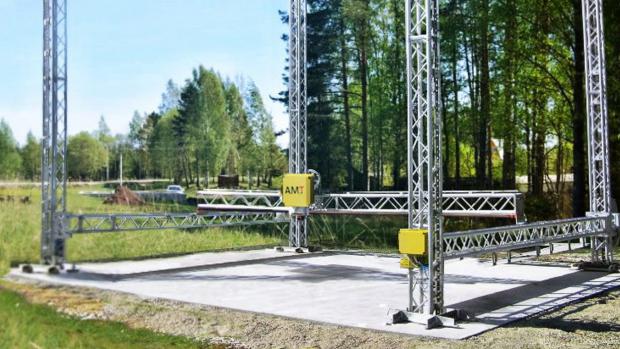
The company's press release is a little hard to follow, but we gather a "standard" six-storey S–500, if standard is the word, can operate in a volume of 11.5 x 11.0 x 15.0 m (or 37.7 x 36.1 x 49.2 ft). However, its makers say it's possible to extend the last dimension to 80 m (263 ft).
The firm simultaneously announced the S–300, capable of operating in a mere 11.5 x 11.0 x 5.4 m volume (that's 37.7 x 36.1 x 17.7 in feet). This equates to a maximum two-storey building on a 120 sq m (1,292 sq ft) plot, its makers say.
We're joining the dots here, but since that 10 sq m plot is roughly what you get from the first two dimensions – the difference between the two models is height, and it's the height that can be extended to 80 m with the S–500. That being the case, were you to allow 3 m (10 ft) per storey, the extended S–500 would be able to print a 26-storey building – firmly into skyscraper territory.