










Breaking News
 "Begin Preparing Yourself..." - Jeffrey Sachs
 The 5-Year Treasury Just Broke 5%... The Whole Curve Is Next
 ICE Denounced for Enacting 'Official Government Policy of Disappearing People'
 Google Just Told Canadian Adults: Give Us Your ID and a Selfie Or Else…And It's Starting Now!!
Top Tech News
 Tesla Model 3 killer charges from 10 to 97% in just 9 minutes
 World-first unpowered DNA computer sets speed record
 I Power 5 Buildings Off-Grid. Here's How
 The US government is pushing hard to get a working nuclear fission reactor into space by late 2028
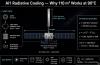 SpaceX Starmind AI in Space Radiator
 China Will Dominate Global Nuclear Energy Through 2035, Analyst Says
 These Absolutely Wild-Looking EVs Are Saudi Arabia's First Homegrown Cars
 BEYOND THE MOON: NASA plans a nuclear-powered fleet to push DEEPER into space
 Big Oil Backs Mazama's $135 Million Bet On Superhot Geothermal
 Quantum compass takes flight on Northrop's Lumberjack drone


Funding for thorium molten salt and other advanced nuclear reactors

Flibe Energy has teamed with Pacific Northwest National Laboratory to examine the use of nitrogen trifluoride as an agent to remove uranium from a molten-salt fuel mixture as a preliminary step for the removal of fission products. They will look at fluorination of Lithium Fluoride-Beryllium Fluoride. The US Department of energy will provide $2,101,982 of funding. There is $525,500 of non-DOE funding.
Flibe Energy has taken the 1960's Oak Ridge molten salt reactor work and enhanced the design into the liquid-fluoride thorium reactor (LFTR). LFTR is a molten-salt reactor design that can utilize thorium more effectively and efficiently than ever before. Thorium becomes Earth's most abundant stored energy resource when used in the LFTR.
The salts used in the LFTR are combinations of lithium fluoride and beryllium fluoride (LiF-BeF2) salts often called "F-Li-Be." Unlike current materials used in nuclear reactors, liquid FLiBe is impervious to radiation damage and incredibly chemically stable. FLiBe can hold enormous amounts of thermal energy safely and at low pressures yet at high temperatures, helping FliBe Energy finally realize the dream of a compact, affordable power system that can be mass-produced to meet the world's needs for power and other essential materials.