










Breaking News
 "Begin Preparing Yourself..." - Jeffrey Sachs
 The 5-Year Treasury Just Broke 5%... The Whole Curve Is Next
 ICE Denounced for Enacting 'Official Government Policy of Disappearing People'
 Google Just Told Canadian Adults: Give Us Your ID and a Selfie Or Else…And It's Starting Now!!
Top Tech News
 Tesla Model 3 killer charges from 10 to 97% in just 9 minutes
 World-first unpowered DNA computer sets speed record
 I Power 5 Buildings Off-Grid. Here's How
 The US government is pushing hard to get a working nuclear fission reactor into space by late 2028
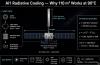 SpaceX Starmind AI in Space Radiator
 China Will Dominate Global Nuclear Energy Through 2035, Analyst Says
 These Absolutely Wild-Looking EVs Are Saudi Arabia's First Homegrown Cars
 BEYOND THE MOON: NASA plans a nuclear-powered fleet to push DEEPER into space
 Big Oil Backs Mazama's $135 Million Bet On Superhot Geothermal
 Quantum compass takes flight on Northrop's Lumberjack drone


China's Robo-Bird Drones Take Citizen Surveillance To New Heights
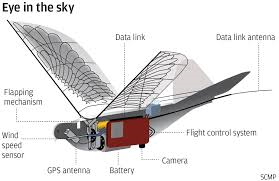

The stealth birds might be covered with real feathers in order to avoid radar and sonic detection. ? TN Editor
If you've ever looked up to the sky and enjoyed the sight of a bird gliding above, be warned: it could be a Chinese drone monitoring your every move.
The idea might seem far fetched, but robotic birds are very much a reality, and China has been using them to surveil people across the country.
Sources told the South China Morning Post that more than 30 military and government agencies have deployed the birdlike drones and related devices in at least five provinces in recent years.
One part of the country that has seen the new technology used extensively is the Xinjiang Uygur autonomous region in China's far west. The vast area, which borders Mongolia, Russia, Kazakhstan, Kyrgyzstan, Tajikistan, Afghanistan, Pakistan and India, is home to a large Muslim population and has long been viewed by Beijing as a hotbed for separatism. As a result, the region and its people have been subjected to heavy surveillance from the central government.