










Breaking News
 "Begin Preparing Yourself..." - Jeffrey Sachs
 The 5-Year Treasury Just Broke 5%... The Whole Curve Is Next
 ICE Denounced for Enacting 'Official Government Policy of Disappearing People'
 Google Just Told Canadian Adults: Give Us Your ID and a Selfie Or Else…And It's Starting Now!!
Top Tech News
 Tesla Model 3 killer charges from 10 to 97% in just 9 minutes
 World-first unpowered DNA computer sets speed record
 I Power 5 Buildings Off-Grid. Here's How
 The US government is pushing hard to get a working nuclear fission reactor into space by late 2028
 SpaceX Starmind AI in Space Radiator
 China Will Dominate Global Nuclear Energy Through 2035, Analyst Says
 These Absolutely Wild-Looking EVs Are Saudi Arabia's First Homegrown Cars
 BEYOND THE MOON: NASA plans a nuclear-powered fleet to push DEEPER into space
 Big Oil Backs Mazama's $135 Million Bet On Superhot Geothermal
 Quantum compass takes flight on Northrop's Lumberjack drone


China invites all UN members countries to cooperate on new Space Station
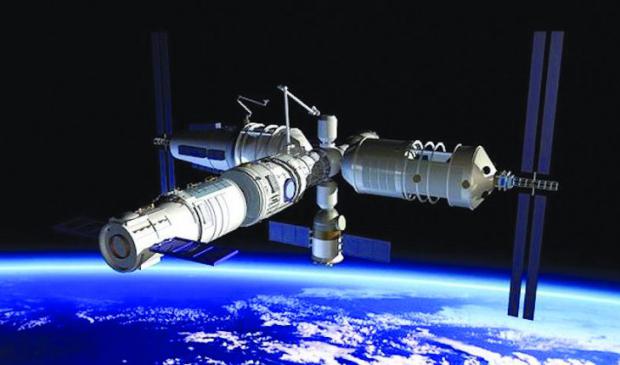
"All countries, regardless of their size and level of development, can participate in the cooperation on an equal footing," he said. Interested public and private organizations, including institutes, academies, universities and private enterprises with scientific orientations, can identify their appropriate models of cooperation on board CSS, may it be the growth of a space plant, or will even accommodation of an astronaut, said the ambassador.
CSS is expected to be launched by 2019, and complete and brought into operation by 2022. Consisting of one core module and two experiment modules, the CSS will have the capacity to accommodate up to three astronauts at the same time.