










Breaking News
 "Begin Preparing Yourself..." - Jeffrey Sachs
 The 5-Year Treasury Just Broke 5%... The Whole Curve Is Next
 ICE Denounced for Enacting 'Official Government Policy of Disappearing People'
 Google Just Told Canadian Adults: Give Us Your ID and a Selfie Or Else…And It's Starting Now!!
Top Tech News
 Tesla Model 3 killer charges from 10 to 97% in just 9 minutes
 World-first unpowered DNA computer sets speed record
 I Power 5 Buildings Off-Grid. Here's How
 The US government is pushing hard to get a working nuclear fission reactor into space by late 2028
 SpaceX Starmind AI in Space Radiator
 China Will Dominate Global Nuclear Energy Through 2035, Analyst Says
 These Absolutely Wild-Looking EVs Are Saudi Arabia's First Homegrown Cars
 BEYOND THE MOON: NASA plans a nuclear-powered fleet to push DEEPER into space
 Big Oil Backs Mazama's $135 Million Bet On Superhot Geothermal
 Quantum compass takes flight on Northrop's Lumberjack drone


First Phantom Express spaceplane engine completed
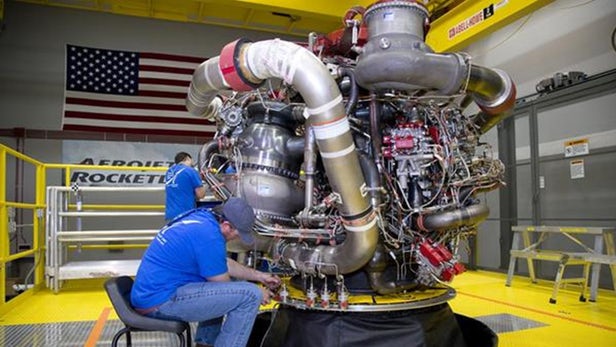
Assembly has been completed on the first test engine that will power DARPA's Boeing-built, next generation spaceplane. Built by Aerojet Rocketdyne , the first updated AR-22 rocket engine for the Phantom Express project will be used in ground tests to demonstrate not only its performance capabilities, but its fast turnaround design.
DARPA's Phantom Express is designed to provide the US government with a fast way to put small payloads of 3,000 lb (1,361 kg) into low Earth orbit at short notice at a cost of only about US$5 million per flight. It consists of a self-contained vertical launch vehicle about the size of a business jet that lifts off from a launch pad, goes into a suborbital, hypersonic trajectory, and releases a small, expendable second stage at the edge of space before returning to base and landing like a conventional aircraft.
Key to this is the AR-22 engine, an updated version of the reusable main engines that propelled the NASA Space Shuttle into orbit. Burning a mixture of cryogenic liquid oxygen and liquid hydrogen, the AR-22 develops 375,000 lb of thrust, which should be adequate for the job, but its key selling point of the new version is that it's much more durable than its predecessor.
When the Space Shuttle first flew in the 1980s, it was envisioned as a workhorse ship that would launch on a regular basis with a turnaround time of only two weeks. Unfortunately, the Shuttle was really an early experimental craft that was pushed into service before the bugs were worked out, and the fortnight turnaround became months.