










Breaking News
 "Begin Preparing Yourself..." - Jeffrey Sachs
 The 5-Year Treasury Just Broke 5%... The Whole Curve Is Next
 ICE Denounced for Enacting 'Official Government Policy of Disappearing People'
 Google Just Told Canadian Adults: Give Us Your ID and a Selfie Or Else…And It's Starting Now!!
Top Tech News
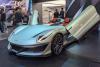 Tesla Model 3 killer charges from 10 to 97% in just 9 minutes
 World-first unpowered DNA computer sets speed record
 I Power 5 Buildings Off-Grid. Here's How
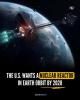 The US government is pushing hard to get a working nuclear fission reactor into space by late 2028
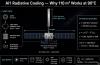 SpaceX Starmind AI in Space Radiator
 China Will Dominate Global Nuclear Energy Through 2035, Analyst Says
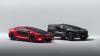 These Absolutely Wild-Looking EVs Are Saudi Arabia's First Homegrown Cars
 BEYOND THE MOON: NASA plans a nuclear-powered fleet to push DEEPER into space
 Big Oil Backs Mazama's $135 Million Bet On Superhot Geothermal
 Quantum compass takes flight on Northrop's Lumberjack drone


Bezos will work with NASA, ESA to create moon base

Jeff Bezos says his Blue Origin space venture will work with NASA as well as the European Space Agency to create a settlement on the moon.
Even if Blue Origin can't strike public-private partnerships, Bezos will do what needs to be done to make it so, he said here at the International Space Development Conference on Friday night.
Bezos laid out his vision for lunar settlement during a fireside chat with Alan Boyle, which took place just after he received the National Space Society's Gerard K. O'Neill Memorial Award.
In the short run, Blue Origin's objective is to reduce the cost of access to space — initially with its New Shepard suborbital spaceship, and then with its orbital-class New Glenn rocket in the 2020s.
In the long run, Bezos' vision is to smooth the way for millions of people working in space. Those people just might live and work in hollowed-out asteroids — a concept that was proposed decades ago by O'Neill, a Princeton physicist whose ideas on space settlement fueled Bezos' passion for the final frontier.