










Breaking News
 "Begin Preparing Yourself..." - Jeffrey Sachs
 The 5-Year Treasury Just Broke 5%... The Whole Curve Is Next
 ICE Denounced for Enacting 'Official Government Policy of Disappearing People'
 Google Just Told Canadian Adults: Give Us Your ID and a Selfie Or Else…And It's Starting Now!!
Top Tech News
 Tesla Model 3 killer charges from 10 to 97% in just 9 minutes
 World-first unpowered DNA computer sets speed record
 I Power 5 Buildings Off-Grid. Here's How
 The US government is pushing hard to get a working nuclear fission reactor into space by late 2028
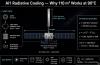 SpaceX Starmind AI in Space Radiator
 China Will Dominate Global Nuclear Energy Through 2035, Analyst Says
 These Absolutely Wild-Looking EVs Are Saudi Arabia's First Homegrown Cars
 BEYOND THE MOON: NASA plans a nuclear-powered fleet to push DEEPER into space
 Big Oil Backs Mazama's $135 Million Bet On Superhot Geothermal
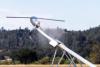 Quantum compass takes flight on Northrop's Lumberjack drone


Quantum dots made from tea leaves lay waste to lung cancer cells

New research led by Swansea University has found a novel way to wring more health benefits out of the stuff, by making quantum dots from tea leaves and using them to slow the growth of lung cancer cells.
Quantum dots are semiconductor particles so small they exhibit strange electrical and optical properties, such as the ability to fluoresce in different colors, or help with certain chemical reactions. Their glowing properties mean they're showing up in TVs and solar cells, and in medical applications as biomarkers to help doctors precisely locate tumors. They're also being used to treat cancer, fight antibiotic-resistant bacteria and convert CO2 into liquid fuels.
The problem is, manufacturing them can be a costly and complicated process, and the end results can be toxic. So the Swansea team, along with researchers from Bharathiar University and K. S. Rangasamy College of Technology, set about making quantum dots out of humble tea leaves.