










Breaking News
 "Begin Preparing Yourself..." - Jeffrey Sachs
 The 5-Year Treasury Just Broke 5%... The Whole Curve Is Next
 ICE Denounced for Enacting 'Official Government Policy of Disappearing People'
 Google Just Told Canadian Adults: Give Us Your ID and a Selfie Or Else…And It's Starting Now!!
Top Tech News
 Tesla Model 3 killer charges from 10 to 97% in just 9 minutes
 World-first unpowered DNA computer sets speed record
 I Power 5 Buildings Off-Grid. Here's How
 The US government is pushing hard to get a working nuclear fission reactor into space by late 2028
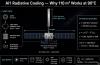 SpaceX Starmind AI in Space Radiator
 China Will Dominate Global Nuclear Energy Through 2035, Analyst Says
 These Absolutely Wild-Looking EVs Are Saudi Arabia's First Homegrown Cars
 BEYOND THE MOON: NASA plans a nuclear-powered fleet to push DEEPER into space
 Big Oil Backs Mazama's $135 Million Bet On Superhot Geothermal
 Quantum compass takes flight on Northrop's Lumberjack drone


The Privacy Coin Matrix: A Comprehensive Spreadsheet of Anonymous Digital Assets

After delving into the world of cryptocurrencies one can see that good majority of digital asset proponents are big fans of privacy and anonymity. Just recently a spreadsheet document was published that lists the top privacy-centric coins and the various differences between them. The paper called "Privacy Coin Matrix," allows enthusiasts to see a comprehensive list of cryptocurrency networks that focus on promoting financial privacy.
Introducing the Privacy Coin Matrix
A Google Docs' spreadsheet has been recently published on the wide variety of cryptocurrencies that aim to bolster financial anonymity. The paper is very comprehensive and includes various details about each coins' attributes strewn across a very long spreadsheet. Coins that are present in the 'Matrix' spreadsheet include Bitcoin Core (BTC), Monero (XMR), Zcash (ZEC), Dash, Verge (XVG), PIVX, Bitcoin Private (BTCP), and more. There are a total of twenty cryptocurrencies listed, alongside some relatively unknown coins like Zoin (ZOI), and Colossus Coin (COLX). There are a bunch of privacy-centric coins missing from the list as well such as anon tokens like Boolberry (BBR), and Bitcoin Dark (BTCD).
There are fourteen separate sections that distinguish each coin such as the asset's summary, features, resources, trading, supply and distribution, wallets, and privacy benefits. With each section summarizing the protocols' features it can give a reader an in-depth look at how much privacy these networks actually give to users. For instance, in the 'privacy' section, readers will likely get the most information concerning anonymity methods. Both Bitcoin Core (BTC) and Ethereum (ETH) mentioned in the list fail miserably when it comes to nearly everything privacy related.