










Breaking News
 "Begin Preparing Yourself..." - Jeffrey Sachs
 The 5-Year Treasury Just Broke 5%... The Whole Curve Is Next
 ICE Denounced for Enacting 'Official Government Policy of Disappearing People'
 Google Just Told Canadian Adults: Give Us Your ID and a Selfie Or Else…And It's Starting Now!!
Top Tech News
 Tesla Model 3 killer charges from 10 to 97% in just 9 minutes
 World-first unpowered DNA computer sets speed record
 I Power 5 Buildings Off-Grid. Here's How
 The US government is pushing hard to get a working nuclear fission reactor into space by late 2028
 SpaceX Starmind AI in Space Radiator
 China Will Dominate Global Nuclear Energy Through 2035, Analyst Says
 These Absolutely Wild-Looking EVs Are Saudi Arabia's First Homegrown Cars
 BEYOND THE MOON: NASA plans a nuclear-powered fleet to push DEEPER into space
 Big Oil Backs Mazama's $135 Million Bet On Superhot Geothermal
 Quantum compass takes flight on Northrop's Lumberjack drone


Scientists develop the smallest, cheapest electronic nose for search and rescue
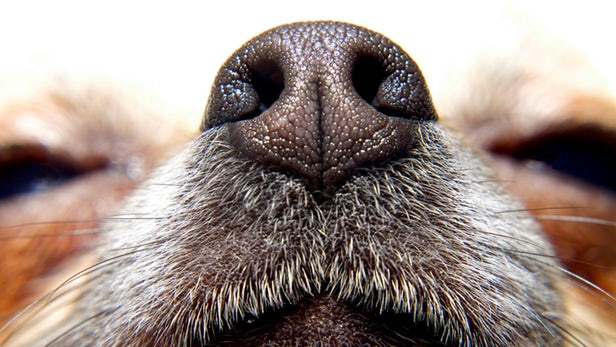
The nose is an array of sensors to detect various substances which, when found together, would provide the crucial "chemical fingerprint" showing the presence of human life.
The array builds on the team's previous work on building sensors to detect acetone, ammonia and isoprene which are all by-products of human metabolism and which leave our bodies either as we breath, or through our skin. Separate research has shown that these chemicals can accumulate quickly where a human is trapped.
The new "nose" combines these sensors with commercially-available ones which detect carbon dioxide and moisture, which could also indicate the presence of a person. It could be fitted to a handheld device, or to a robot or drone for reaching inaccessible locations. The team's own sensors are made from metal-oxide films with a high surface area, which makes them sensitive to trace concentrations of the target chemicals.