










Breaking News
 "Begin Preparing Yourself..." - Jeffrey Sachs
 The 5-Year Treasury Just Broke 5%... The Whole Curve Is Next
 ICE Denounced for Enacting 'Official Government Policy of Disappearing People'
 Google Just Told Canadian Adults: Give Us Your ID and a Selfie Or Else…And It's Starting Now!!
Top Tech News
 Tesla Model 3 killer charges from 10 to 97% in just 9 minutes
 World-first unpowered DNA computer sets speed record
 I Power 5 Buildings Off-Grid. Here's How
 The US government is pushing hard to get a working nuclear fission reactor into space by late 2028
 SpaceX Starmind AI in Space Radiator
 China Will Dominate Global Nuclear Energy Through 2035, Analyst Says
 These Absolutely Wild-Looking EVs Are Saudi Arabia's First Homegrown Cars
 BEYOND THE MOON: NASA plans a nuclear-powered fleet to push DEEPER into space
 Big Oil Backs Mazama's $135 Million Bet On Superhot Geothermal
 Quantum compass takes flight on Northrop's Lumberjack drone


Inventing The Next Computer
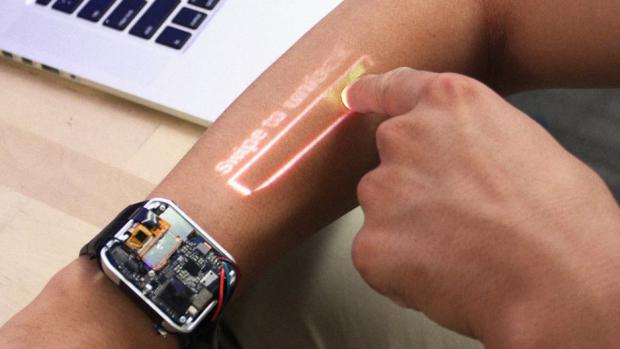
Americans spend more than 10 hours every day staring at screens. But researchers are developing cutting-edge interfaces that could change the way we interact with digital media–interfaces that, in many cases, don't require screens at all. Instead, your skin is the interface. Objects around you are the interface. Architecture itself is the interface.
The evolution–or devolution–of the interface was prominently on display this week at the Association for Computing Machinery's 2018 CHI Conference on Human Factors in Computing Systems (or ACM CHI, for short). The conference is a hub for the world's top minds to share the latest breakthroughs in human-computer interaction. The papers and projects presented at ACM CHI tend to act like a barometer for what the future of computers might look like–and this year, it seemed to suggest that our computers will be increasingly embedded in the world around us.