










Breaking News
 "Begin Preparing Yourself..." - Jeffrey Sachs
 The 5-Year Treasury Just Broke 5%... The Whole Curve Is Next
 ICE Denounced for Enacting 'Official Government Policy of Disappearing People'
 Google Just Told Canadian Adults: Give Us Your ID and a Selfie Or Else…And It's Starting Now!!
Top Tech News
 Tesla Model 3 killer charges from 10 to 97% in just 9 minutes
 World-first unpowered DNA computer sets speed record
 I Power 5 Buildings Off-Grid. Here's How
 The US government is pushing hard to get a working nuclear fission reactor into space by late 2028
 SpaceX Starmind AI in Space Radiator
 China Will Dominate Global Nuclear Energy Through 2035, Analyst Says
 These Absolutely Wild-Looking EVs Are Saudi Arabia's First Homegrown Cars
 BEYOND THE MOON: NASA plans a nuclear-powered fleet to push DEEPER into space
 Big Oil Backs Mazama's $135 Million Bet On Superhot Geothermal
 Quantum compass takes flight on Northrop's Lumberjack drone


Global Race To Develop Self-Navigating Ships Leaves U.S. Behind
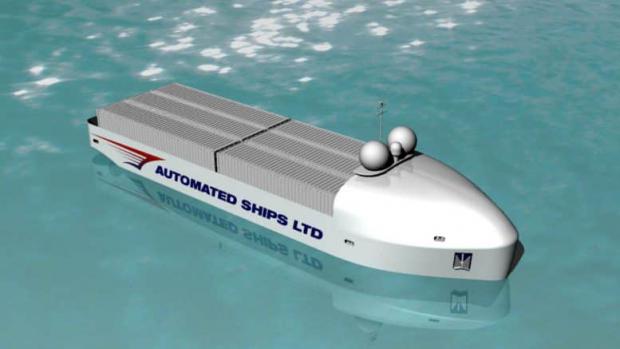
The day in which unmanned "ghost ships" ply the seas laden with cargo is fast approaching. But don't expect the drone vessels to be flying a U.S. flag.
The United States is not among the global hotspots where a revolution in autonomous commercial shipping is unfolding. One needs to look to places like Norway, Finland, Singapore and China to observe the competition for unmanned shipping.
A shipyard in Norway will soon begin building a 237-foot battery-powered electric container ship that will operate with nary a sailor aboard by 2020.
Announcement of that project and several others over the past year have rippled through maritime circles worldwide.
Finland is looking at prototypes for an autonomous ferry. China has set aside a 225-square-mile ocean area to test crewless ships. And Japanese shipping lines have formed a consortium with the goal of having 250 remote-control cargo ships by 2025.