










Breaking News
 "Begin Preparing Yourself..." - Jeffrey Sachs
 The 5-Year Treasury Just Broke 5%... The Whole Curve Is Next
 ICE Denounced for Enacting 'Official Government Policy of Disappearing People'
 Google Just Told Canadian Adults: Give Us Your ID and a Selfie Or Else…And It's Starting Now!!
Top Tech News
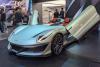 Tesla Model 3 killer charges from 10 to 97% in just 9 minutes
 World-first unpowered DNA computer sets speed record
 I Power 5 Buildings Off-Grid. Here's How
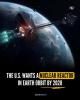 The US government is pushing hard to get a working nuclear fission reactor into space by late 2028
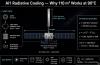 SpaceX Starmind AI in Space Radiator
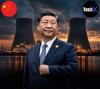 China Will Dominate Global Nuclear Energy Through 2035, Analyst Says
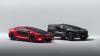 These Absolutely Wild-Looking EVs Are Saudi Arabia's First Homegrown Cars
 BEYOND THE MOON: NASA plans a nuclear-powered fleet to push DEEPER into space
 Big Oil Backs Mazama's $135 Million Bet On Superhot Geothermal
 Quantum compass takes flight on Northrop's Lumberjack drone


How to become a space tourist: 8 companies (almost) ready to launch
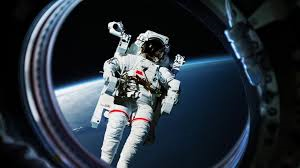
On April 28, 2001, 60-year-old American businessman Dennis Tito became the first tourist to leave Earth's atmosphere behind, spending nearly 8 days in space, much of it aboard the International Space Station (ISS)—and reportedly paying $20 million dollars to do so. Despite objections from NASA, who thought that Tito's training would not be sufficient by the time of his flight—Tito also thinks it's likely they were concerned about his age—tourism company Space Adventures negotiated a deal with the Russian agency Roscosmos that got Tito a seat in a Soyuz.
Since then, there have been only six other space tourists, all traveling aboard a Soyuz to the ISS. The last one, Cirque du Soleil co-founder Guy Laliberté, flew in 2009. The end of this early space tourism era came about due to the doubling of the crew size aboard the ISS in 2009, which left no room for visitors on the station, as well as the retirement of the space shuttle in 2011, which meant that NASA needed all extra Soyuz seats to launch its astronauts.