










Breaking News
 "Begin Preparing Yourself..." - Jeffrey Sachs
 The 5-Year Treasury Just Broke 5%... The Whole Curve Is Next
 ICE Denounced for Enacting 'Official Government Policy of Disappearing People'
 Google Just Told Canadian Adults: Give Us Your ID and a Selfie Or Else…And It's Starting Now!!
Top Tech News
 Tesla Model 3 killer charges from 10 to 97% in just 9 minutes
 World-first unpowered DNA computer sets speed record
 I Power 5 Buildings Off-Grid. Here's How
 The US government is pushing hard to get a working nuclear fission reactor into space by late 2028
 SpaceX Starmind AI in Space Radiator
 China Will Dominate Global Nuclear Energy Through 2035, Analyst Says
 These Absolutely Wild-Looking EVs Are Saudi Arabia's First Homegrown Cars
 BEYOND THE MOON: NASA plans a nuclear-powered fleet to push DEEPER into space
 Big Oil Backs Mazama's $135 Million Bet On Superhot Geothermal
 Quantum compass takes flight on Northrop's Lumberjack drone


World's only Rotor Sail passenger ship goes into service
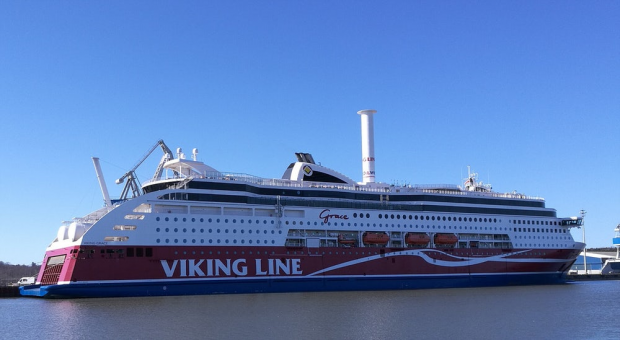
Now a passenger ship operated by the Viking Line has been treated to the Rotor Sail Solution and has set sail on wind-assisted trips between Finland and Sweden.
The M/S Viking Grace – which has 880 cabins and can accommodate 2,800 passengers and around 500 cars – went into service in 2013, when it was reported to be the first ship of its size to be fueled by Liquefied Natural Gas (LNG). Its hull was hydrodynamically-optimized for low fuel consumption and soundproofing technology was fitted to keep noise down. So it already boasted some noteworthy green credentials.
A single Rotor Sail cylinder measuring 24 meters (78 ft) tall and 4 meters (13 ft) in diameter has now been installed on the passenger vessel, which is described as a modern version of the Flettner rotor.