










Breaking News
 "Begin Preparing Yourself..." - Jeffrey Sachs
 The 5-Year Treasury Just Broke 5%... The Whole Curve Is Next
 ICE Denounced for Enacting 'Official Government Policy of Disappearing People'
 Google Just Told Canadian Adults: Give Us Your ID and a Selfie Or Else…And It's Starting Now!!
Top Tech News
 Tesla Model 3 killer charges from 10 to 97% in just 9 minutes
 World-first unpowered DNA computer sets speed record
 I Power 5 Buildings Off-Grid. Here's How
 The US government is pushing hard to get a working nuclear fission reactor into space by late 2028
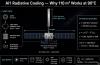 SpaceX Starmind AI in Space Radiator
 China Will Dominate Global Nuclear Energy Through 2035, Analyst Says
 These Absolutely Wild-Looking EVs Are Saudi Arabia's First Homegrown Cars
 BEYOND THE MOON: NASA plans a nuclear-powered fleet to push DEEPER into space
 Big Oil Backs Mazama's $135 Million Bet On Superhot Geothermal
 Quantum compass takes flight on Northrop's Lumberjack drone


Quantum spookiness exploited for better random numbers
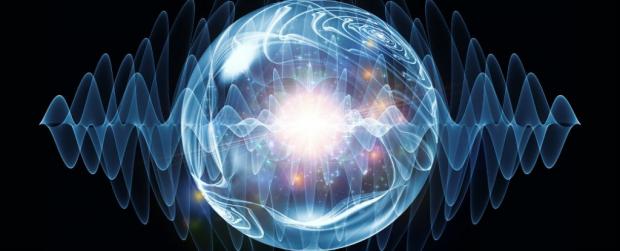
The method uses photons to generate a string of random ones and zeros, and leans on the laws of physics to prove that these strings are truly random, rather than merely posing as random. The researchers say their work could improve digital security and cryptography.
The challenge for existing random number generators is not only creating truly random numbers, but proving that those numbers are random. "It's hard to guarantee that a given classical source is really unpredictable," says Peter Bierhorst, a mathematician at the National Institute of Standards and Technology (NIST), where this research took place. "Our quantum source and protocol is like a fail-safe. We're sure that no one can predict our numbers."
For example, random number algorithms often rely on a source of data which may ultimately prove predictable, such as atmospheric noise. And however complex the algorithm, it's still applying consistent rules. Despite these potential imperfections, these methods are relied on in the day-to-day encryption of data.