










Breaking News
 "Begin Preparing Yourself..." - Jeffrey Sachs
 The 5-Year Treasury Just Broke 5%... The Whole Curve Is Next
 ICE Denounced for Enacting 'Official Government Policy of Disappearing People'
 Google Just Told Canadian Adults: Give Us Your ID and a Selfie Or Else…And It's Starting Now!!
Top Tech News
 Tesla Model 3 killer charges from 10 to 97% in just 9 minutes
 World-first unpowered DNA computer sets speed record
 I Power 5 Buildings Off-Grid. Here's How
 The US government is pushing hard to get a working nuclear fission reactor into space by late 2028
 SpaceX Starmind AI in Space Radiator
 China Will Dominate Global Nuclear Energy Through 2035, Analyst Says
 These Absolutely Wild-Looking EVs Are Saudi Arabia's First Homegrown Cars
 BEYOND THE MOON: NASA plans a nuclear-powered fleet to push DEEPER into space
 Big Oil Backs Mazama's $135 Million Bet On Superhot Geothermal
 Quantum compass takes flight on Northrop's Lumberjack drone


Rocket Lab sets date for first commercial launch of its Electron rocket
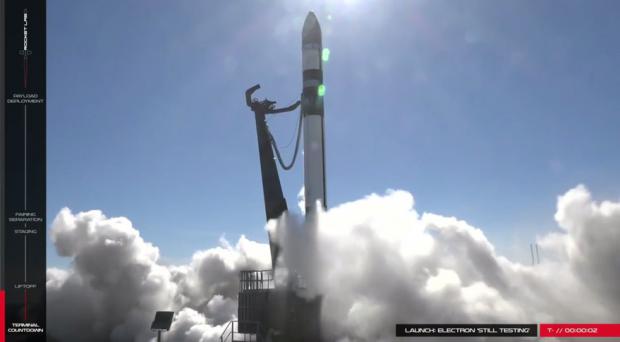
US spaceflight startup Rocket Lab is officially open for business and has scheduled its very first commercial launch for later this month. The company will launch its small Electron rocket with payloads from two paying satellite operators on board — just three months after completing a second test flight of the vehicle. The upcoming mission will initiate the beginning of customer operations for Rocket Lab, which claims to have a busy manifest for this year and next.
After four years of developing the Electron, Rocket Lab flew the vehicle for the first time in May 2017 out of the company's own private launch site in New Zealand. That test flight — appropriately dubbed "It's a Test" — made it to space, though the rocket didn't achieve orbit, due to a glitch in communication equipment on the ground. Rocket Lab was able to fix the problem, though, and performed a second test flight of the Electron in January in a mission called "Still Testing." That time, the vehicle did make it to orbit and even deployed four satellites, including a secret disco ball probe made by Rocket Lab's CEO Peter Beck.