










Breaking News
 "Begin Preparing Yourself..." - Jeffrey Sachs
 The 5-Year Treasury Just Broke 5%... The Whole Curve Is Next
 ICE Denounced for Enacting 'Official Government Policy of Disappearing People'
 Google Just Told Canadian Adults: Give Us Your ID and a Selfie Or Else…And It's Starting Now!!
Top Tech News
 Tesla Model 3 killer charges from 10 to 97% in just 9 minutes
 World-first unpowered DNA computer sets speed record
 I Power 5 Buildings Off-Grid. Here's How
 The US government is pushing hard to get a working nuclear fission reactor into space by late 2028
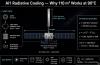 SpaceX Starmind AI in Space Radiator
 China Will Dominate Global Nuclear Energy Through 2035, Analyst Says
 These Absolutely Wild-Looking EVs Are Saudi Arabia's First Homegrown Cars
 BEYOND THE MOON: NASA plans a nuclear-powered fleet to push DEEPER into space
 Big Oil Backs Mazama's $135 Million Bet On Superhot Geothermal
 Quantum compass takes flight on Northrop's Lumberjack drone


Breakthrough to enable computers that are 100 times faster

Until now, two major challenges stood in the way of creating the terahertz microchip: overheating and scalability.
However, in a paper published this week in Laser and Photonics Review, Dr. Levy, head of HU's Nano-Opto Group and HU emeritus professor Joseph Shappir have shown proof of concept for an optic technology that integrates the speed of optic (light) communications with the reliability—and manufacturing scalability—of electronics.
Optic communications encompass all technologies that use light and transmit through fiber optic cables, such as the internet, email, text messages, phone calls, the cloud and data centers, among others. Optic communications are super fast but in microchips they become unreliable and difficult to replicate in large quantities.
Now, by using a Metal-Oxide-Nitride-Oxide-Silicon (MONOS) structure, Levy and his team have come up with a new integrated circuit that uses flash memory technology—the kind used in flash drives and discs-on-key—in microchips. If successful, this technology will enable standard 8-16 gigahertz computers to run 100 times faster and will bring all optic devices closer to the holy grail of communications: the terahertz chip.