










Breaking News
 "Begin Preparing Yourself..." - Jeffrey Sachs
 The 5-Year Treasury Just Broke 5%... The Whole Curve Is Next
 ICE Denounced for Enacting 'Official Government Policy of Disappearing People'
 Google Just Told Canadian Adults: Give Us Your ID and a Selfie Or Else…And It's Starting Now!!
Top Tech News
 Tesla Model 3 killer charges from 10 to 97% in just 9 minutes
 World-first unpowered DNA computer sets speed record
 I Power 5 Buildings Off-Grid. Here's How
 The US government is pushing hard to get a working nuclear fission reactor into space by late 2028
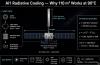 SpaceX Starmind AI in Space Radiator
 China Will Dominate Global Nuclear Energy Through 2035, Analyst Says
 These Absolutely Wild-Looking EVs Are Saudi Arabia's First Homegrown Cars
 BEYOND THE MOON: NASA plans a nuclear-powered fleet to push DEEPER into space
 Big Oil Backs Mazama's $135 Million Bet On Superhot Geothermal
 Quantum compass takes flight on Northrop's Lumberjack drone


Most Privacy Coins Aren't That Private
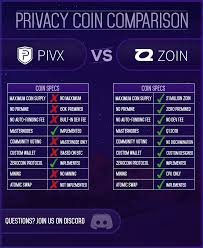
Privacy coins are meant to be private. That's their raison d'être. Strip away the privacy, and they simply become altcoins, and dangerous ones at that, with the potential to deanonymize their users and expose their secrets. A number of recent reports have cast doubt on the privacy features offered by coins such as zcash and monero.
There's Safety in Numbers
Zcash is a controversial coin for a number of reasons such as its "founders reward" that sees 20% of all coins mined in the first four years go to stakeholders. The technology that enables zcash private transactions, zk-Snarks, is widely used by privacy coins within the same family such as zclassic, zencash, and bitcoin private. The trouble with zcash, as far as privacy advocates are concerned, is that shielded (i.e private) transactions aren't enabled by default. In fact, 85% of all zcash transactions are public, and some zcash wallets don't even support private transactions.