










Breaking News
 "Begin Preparing Yourself..." - Jeffrey Sachs
 The 5-Year Treasury Just Broke 5%... The Whole Curve Is Next
 ICE Denounced for Enacting 'Official Government Policy of Disappearing People'
 Google Just Told Canadian Adults: Give Us Your ID and a Selfie Or Else…And It's Starting Now!!
Top Tech News
 Tesla Model 3 killer charges from 10 to 97% in just 9 minutes
 World-first unpowered DNA computer sets speed record
 I Power 5 Buildings Off-Grid. Here's How
 The US government is pushing hard to get a working nuclear fission reactor into space by late 2028
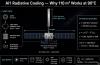 SpaceX Starmind AI in Space Radiator
 China Will Dominate Global Nuclear Energy Through 2035, Analyst Says
 These Absolutely Wild-Looking EVs Are Saudi Arabia's First Homegrown Cars
 BEYOND THE MOON: NASA plans a nuclear-powered fleet to push DEEPER into space
 Big Oil Backs Mazama's $135 Million Bet On Superhot Geothermal
 Quantum compass takes flight on Northrop's Lumberjack drone


Astronaut Scott Kelly Now Has Different DNA Than His Identical Twin Brother After One Year In Space
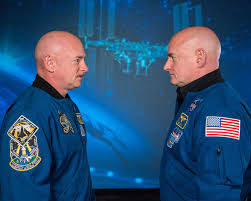
A study of Kelly and his identical twin brother found that spending nearly a year in space significantly changed the astronaut's DNA.
Kelly spent 340 straight days aboard the International Space Station from 2015 to 2016. When the NASA veteran returned to Earth, researchers immediately noted that he had grown two inches in height. A new study comparing Scott to his identical twin, Mark — who is also a NASA astronaut and stayed on Earth during the 340-day trip — has revealed that long-term space travel alters more than just your height.
"Scott's telomeres (endcaps of chromosomes that shorten as one ages) actually became significantly longer in space," NASA researchers wrote in a statement. The space agency added that Kelly had hundreds of "space genes" activated by the year-long flight which reportedly altered the astronaut's "immune system, DNA repair, bone formation networks, hypoxia, and hypercapnia."