










Breaking News
 "Begin Preparing Yourself..." - Jeffrey Sachs
 The 5-Year Treasury Just Broke 5%... The Whole Curve Is Next
 ICE Denounced for Enacting 'Official Government Policy of Disappearing People'
 Google Just Told Canadian Adults: Give Us Your ID and a Selfie Or Else…And It's Starting Now!!
Top Tech News
 Tesla Model 3 killer charges from 10 to 97% in just 9 minutes
 World-first unpowered DNA computer sets speed record
 I Power 5 Buildings Off-Grid. Here's How
 The US government is pushing hard to get a working nuclear fission reactor into space by late 2028
 SpaceX Starmind AI in Space Radiator
 China Will Dominate Global Nuclear Energy Through 2035, Analyst Says
 These Absolutely Wild-Looking EVs Are Saudi Arabia's First Homegrown Cars
 BEYOND THE MOON: NASA plans a nuclear-powered fleet to push DEEPER into space
 Big Oil Backs Mazama's $135 Million Bet On Superhot Geothermal
 Quantum compass takes flight on Northrop's Lumberjack drone


Race for global low earth orbit high bandwidth internet satellites
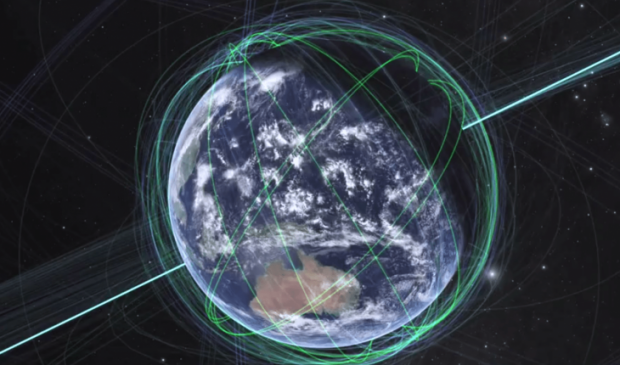

Low-earth orbit systems need complex software to run constellations of satellites and sophisticated antennas on the ground to aim at spacecraft zooming from horizon to horizon. Costs quickly overwhelm savings from building smaller gear.
Boeing is seeking approval for 60 satellites
OneWeb has FCC permission to serve the U.S. market using 720 satellites authorized by the U.K.
SpaceX's plan calls for 4,425 satellites, but it also has applied for an additional 7,518.
Two dozen ventures are raising money in an effort to fund global satellite networks.
Satellites in low-earth trajectories operate 200 to 1,200 miles above Earth and orbit it roughly every 90 minutes. Traditional communications satellites operate much higher, at an altitude of about 22,000 miles.
The LEO satellites will need to be massed produced cheaply and replaced every 4-5 years.