










Breaking News
 This is the future we shall bring into being
 Elon Musk's Vision For The Future Looks Like A Movie
 Phosphorus Munitions Fired by Israel Burn Groves, Orchards in Southern Lebanon
 Iran's IRGC Warns It Will Expand 'Geography of the War' If the US Attacks Again
Top Tech News
 BEYOND THE MOON: NASA plans a nuclear-powered fleet to push DEEPER into space
 Big Oil Backs Mazama's $135 Million Bet On Superhot Geothermal
 Quantum compass takes flight on Northrop's Lumberjack drone
 Terrifying AI Behavior Even Its Creators Couldn't Explain
 WW3 Near-Miss? AI Hallucinated Nuclear Weapons Components Aboard Chinese Vessel Bound For Iran
 Stripe Is Building the Toll Road for the Machine Economy
 Toyota Dakar hopeful swaps twin-turbo V6 for hydrogen fuel cells
 4-min turbo-inflatable cubic camp castle is now available in the USA
 Researchers Used Claude To Hack OpenAI Employee Accounts
 Chinese Scientists Develop New Oil Refining Method That Cuts Energy Use by 90%



Carbon fiber waste used to improve water-draining concrete
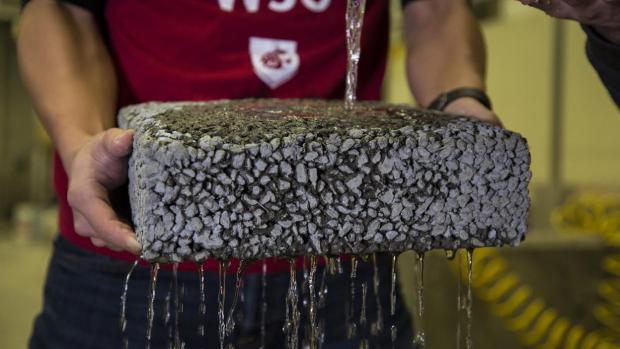
Thanks to research being conducted at Washington State University, however, it may soon be possible to grind up carbon fiber waste and use it in new-and-improved pervious concrete.
First of all, what is pervious concrete? It's highly-porous concrete that stormwater run-off can drain straight through, passing into the soil underneath. Not only does it help prevent flooding, but it also reduces aquatic pollution – with traditional non-pervious concrete, the water runs the length of the road, accumulating more and more pollutants along the way, before going down a storm sewer and into the local waterways.
Unfortunately, though, because it's so porous, pervious concrete isn't as durable as its regular counterpart. That's where the carbon fiber comes in.